About this page...


You're now viewing the old Lundy Bird Observatory blogspot. Explore the new website for all your favourite island news and wildlife updates. If you have sightings to report, please consider sharing your observations or photographs with the Bird Obs team here.

Monday, 29 August 2022

22nd to 28th August – Winds from the northeast bring more migrants

Bright and mild with winds from the north and northeast. Strong winds from the east towards the end of the week. Low cloud and fog on the 26th.

There has been a slight increase in the number of Woodpigeon with nine seen on the 25th. A Collared Dove was seen on the 28th and as expected with the Bank Holiday, five Racing Pigeons were seen on the 27th with another three on the 28th. A lone Swift was seen feeding with Swallows over Millcombe on the evening of the 24th.

There are still waders passing over the island with Ringed Plover on the 22nd, 26th, 27th and 28th. A single Whimbrel was recorded on the 22nd, with another calling over Ackland’s Moor with two Curlew on the 24th. A flock of four Dunlin and an individual were seen on the 27th with further singles on the 24th, and 28th. Snipe were seen over South West Field on the 24th, 25th and 27th. A Common Sandpiper was heard on the 27th and a Greenshank was calling below Smelly Gully on the 22nd.

 wo Grey Heron were seen coming in from the East on the 22nd. At least one Sparrowhawk is still regularly being seen along with the pair of Kestrel. The majority of Skylark have now left the island with only a single bird being seen all week. Flocks of Sand Martin were seen on the 22nd, 24th and 27th with 12, nine and eight seen respectively. There has been an obvious increase in the passage of Swallows with a high count of 65 on the 24th. Three House Martin were seen on the 27th.

The variety of warbler species is now increasing as more head south. Willow Warblers are becoming less common but there was a high count of 40 on the 24th.  Also on the 24th were ten Chiffchaff, two Sedge Warbler, a Garden Warbler, two Whitethroat and a Goldcrest. Two Grasshopper Warblers were seen on the 27th. Single Blackcap were seen on the 26th and 28th with three on the 27th. A total of six Whitethroat were seen on the 27th.

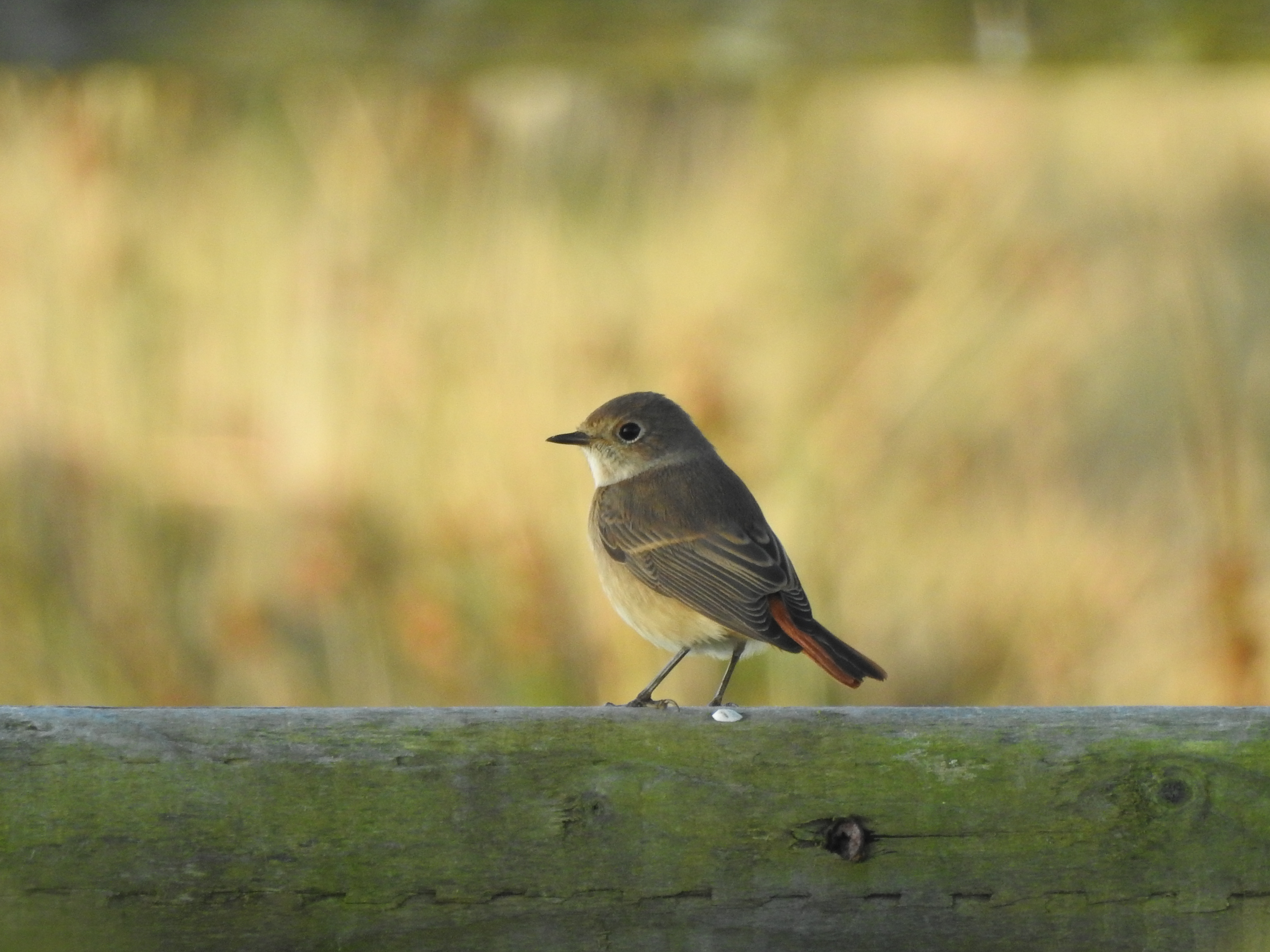
Flycatchers are still quite common with 13 Spotted Flycatchers on the 24th and seven on the 27th being the highest counts of Wh. Single Pied Flycatchers were seen on the 23rd, 24th and 28th with two present on the 22nd. The highest count Wheatear was 11 on the 25th with nine seen on the 24th and 27th. A Black Redstart was seen by Halfway Wall on the 22nd and a Whinchat was present on the 27th.

Whinchat, South-West Field © Stuart Cossey


A Grey Wagtail flew over calling on the 27th along with an increase in alba Wagtails. A flock of five White Wagtails were seen on the 25th and six on the 27th. Flyover Pied/White Wagtails have been regular since the 25th with a few being seen in the fields and around the Village. The coarse ‘sphiz’ flight call of Tree Pipits have been heard all week with five on the 22nd, three on the 23rd, four on the 25th, two on the 26th, seven on the 27th and nine on the 28th.  There has also been an increase in Meadow Pipit migration with a number of bigger flocks seen, including 38 on the 26th. On the 28th five Common Crossbill flew south over Millcombe calling, the first time this species of finch have been seen this year.

In non-avian news 6+ Common Dolphin were in the Landing Bay. Hummingbird Hawk-moth were seen on the 24th, 26th and 27th.

Damp Blackbird during low cloud on the 26th © Stuart Cossey

Contributors: S Cossey, R Ellis, Z Wait, T and A Taylor

Monday, 22 August 2022

15th to 21st August – Slow but steady migration

Mild with winds from the southwest. Many days were overcast or with periods of rain and low cloud.

Waders continue to be seen or heard around the island. Ringed Plover and Whimbrel were recorded on four dates this week. There was a max count of three Ringed Plover on the 16th, two flew over South West Field and another was seen over the Airstrip. A Black-tailed Godwit was seen flying over Halfway Wall with four Whimbrel on the 21st. A Curlew was present on the 16th and was calling around the Village for most of the morning before heading west. Single Dunlin were recorded on the 15th, 17th and 21st. Snipe on the 16th and 21st and two Common Sandpiper on the 18th. A Redshank was also heard calling over Ackland’s Moor on the 15th. 

Dunlin, Pondsbury © Stuart Cossey

A Black-headed Gull was seen sheltering by Rat Island on the 16th and a juvenile Yellow-legged Gull was feeding in Tillage Field with a large flock of gulls on the 17th. A single Cormorant flew past the Landing Bay on the 16th and three flew over the West Coast on the 19th. The Sparrowhawk first seen on the 12th was joined by a second on the 17th with a male and female were seen fighting in Millcombe Woods on the 19th. Occasional small flocks of Swallows are being seen moving south with 14 recorded on the 17th and 23 on the 19th. No Sand or House Martins were noted this week.

Willow Warblers continue to be seen, mostly within Millcombe Valley. A max count of 38 were seen on the 17th with only two and three seen on the 20th and 21st respectively. A Chiffchaff was seen on the 21st and the first Goldcrest of autumn was in Millcombe Pines on the 15th. Sedge Warblers were recorded on four days, though mostly being seen around Pondsbury. Whitethroat were more common with a max count of six on the 19th. Singles were seen on the 15th, 16th and 20th with two on the 17th. Blackcap were seen on the 17th and 21st.

Pied and Spotted Flycatchers were seen most days with five Spotted Flycatchers on the 19th. Three Pied Flycatchers were present on the 18th, two on the 15th and singles on the 17th, 19th and 21st. Numbers of Wheatear are dropping off with the first black day on the 16th – the first since April. There have been occasional days of Tree Pipit migration with two heard on the 15th, one on the 17th and 11 on the 18th. The numbers of Meadow Pipit have also picked up with 63 on the 21st, including two flocks of 20+.

Linnet and Goldfinch numbers fluctuate with 93 Linnets recorded on the 15th and 104 on the 16th. Only five Linnets were heard or seen on the 21st. Goldfinch numbers peaked at 25 on the 17th and 21 on the 15th. Towards the end of the week nine were regularly seen around Millcombe.

Linnets, Old Light Track © Stuart Cossey 

In non-avian news, seven Harbour Porpoise, including two calves, were seen from Benjamin’s Chair on the 18th. A Hummingbird Hawk-moth was seen on the 21st and a Convolvulus Hawk-moth -on the 19th. 38 species of moth were trapped on the 16th including a new species for the island, Oblique Carpet. There were also a few migrant moths such as Bordered Straw and Rush Veneer. On the 19th a Canary-shouldered Thorn was trapped, the only confirmed record since 1907!

Canary-shouldered Thorn, Millcombe © Stuart Cossey

Bordered Straw, Millcombe © Stuart Cossey

Oblique Carpet, Millcombe © Stuart Cossey

Contributors: S Cossey, R Ellis, Z Wait, T and A Taylor, J Coomes, A McCarthy

Monday, 15 August 2022

8th to 14th August – First arrival of Flycatchers

A warm week with days starting calm and northeasterly winds picking up towards the afternoon. Temperatures reached a peak of 28.1° on the 14th.

A large group of around 90 Swifts were seen feeding on flying ants over Castle Hill on the 10th. Smaller groups were seen the rest of the week apart from the 13th. A Cuckoo flew through Millcombe on the morning of the 12th pursued by the local Swallows. Two Stock Dove were reported on the 11th.

Waders were often heard flying over the island during the mornings. Golden Plover were heard on the 9th and 10th, Ringed Plover on the 12th and 14th and a Curlew on the 8th. A Dunlin was heard on the 9th and then one was on Pondsbury on the 14th. Three Snipe were around Pondsbury on the 8th, 4 on the 10th and three on the 14th. A Common Sandpiper was by Rat Island on the 14th and two Green Sandpipers were by Pondsbury.

A Sandwich Tern was seen briefly on the 11th as it flew past Rat Island. Three Cormorant flew over Millcombe on the 9th and a Grey Heron was at the North End on the 11th. A Sparrowhawk was seen around Millcombe on the 12th and then by Tillage Field on the 13th. A female/immature Marsh Harrier flew over Barton Field on the 8th and a female/immature Hen Harrier headed south over the Castle on the 13th.

Small groups of hirundines were seen this week with a max count of 10 Sand Martins on the 8th and 11th. A high count of 42 Swallows was seen on the 14th and 13 House Martins on the 9th.

Willow Warblers were still being seen in good numbers this week. 62 were counted on the 12th and at least 120 were seen on the 14th. Single Chiffchaff were seen on the 8th, 10th and 13th with two on the 9th. Two Blackcap were ringed on the 14th. The first Garden Warblers of autumn were seen with one on the 13th and two on the 14th. Low numbers of Sedge Warbler and Whitethroat were seen every day.

A single Spotted Flycatcher was first seen on the 9th with a peak of 10 seen on the 12th. Pied Flycatchers first arrived on the 10th with a high count of six on the 14th. Flycatchers were not only seen in Millcombe but quite often sitting on walls or fence lines across the south of the island. A female Redstart was by Quarter Wall on the 9th and a Whinchat in South West Field on the 13th. A high count of 31 Wheatear were seen on the 13th with most seen around the airstrip and Ackland's Moor.

Female Redstart, Quarter Wall © Stuart Cossey

Wheatears, Ackland's Moor © Stuart Cossey

Pied Flycatcher, Water Tanks © Stuart Cossey

Spotted Flycatcher, Quarter Wall © Stuart Cossey

Three Tree Pipits were heard flying over on the 12th and 13th with a single on the 14th. A Greenfinch was reported in Millcombe on the 12th and two Siskins flew over on the 14th.

In non-avian news, a Basking Shark was reported off the Castle on the 14th. Two Common Pipistrelle were picked up on a bat detector on the 11th. One at Quarry Pond and the other in Millcombe. Two Hummingbird Hawk-moths were seen on the 12th and another on the 14th. There was an excellent moth trap haul on the morning of the 14th with over 200 moths of 42 species.

Contributors: S Cossey, R Ellis, Z Wait, M and J Webber

Tuesday, 9 August 2022

1st to 7th August – Willow Warblers arrive in force

After strong winds from the southwest the first week of August has been bright and warm. Light winds from the north and northeast have brought migrants south, occasionally in big numbers.

With most ponds drying up in the hot weather, these have been good locations to look for birds. Pondsbury and Rocket Pole Pond are the only two still with good levels. A female Teal was seen on Pondsbury on the 3rd and 7th with a juvenile Garganey skulking around the edges of Pondsbury on the 3rd.

The last of the water at Quarter Wall Pond © Stuart Cossey

A group of 23 Swift were seen foraging over the Village on the evening of the 6th. Numbers of Woodpigeon increased to seven on the 5th which included one juvenile bird.

Waders continue to be seen or heard over the island. A Ringed Plover was heard by the Terrace on the 1st and over South West Field on the 6th. A Snipe was heard over the village on the evening of the 1st with birds then being flushed on the 5th and 7th.

During the sunshine on the 6th, flying ants emerged across the island causing large flocks of up to 500 Herring and Lesser Black-backed Gulls to swarm and circle above South Light. A Common Gull was seen off the North End on the 3rd and a Black-headed Gull over the Village on the 6th. Last week’s young Grey Heron is still at Pondsbury and occasionally take flights over the island. Possibly the last Puffin of the year was seen off the North End on the 5th and a Red-throated Diver was unexpected during a seawatch at the North End on the 3rd. The Manx Shearwater chicks in the artificial nest boxes were ringed on the 6th and should be ready to fledge by the end of August. 

A late night Storm Petrel ringing session took place towards the North End on the 1st. 20 birds were caught around a breeding colony. These included three controls (already ringed). One from North Wales, one from Skokholm Island, Pembrokeshire and one from the Lizard, Cornwall. The oldest was ringed as an adult in 2016. Storm Petrels are one of the smallest seabirds in the world and are roughly the same weight as a House Sparrow. They spend most of their lives at sea and only come to land at night in the summer to breed.

Hirundines continue to move through in small numbers with 11 and 10 Sand Martin on the 6th and 7th. Swallow passage peaked at 23 on the 1st and 25 on the 7th. Seven House Martins were seen on the 7th.

Switching of winds to the north on the 1st brought a huge fall of Willow Warblers. 207 were seen on the morning census with at least 400 seen throughout the day. Other warblers seen on the 1st included four Chiffchaff, ten Sedge Warbler and three Whitethroat. Only four Willow Warbler were seen on the 2nd but the rest of the week remained at between 20 and 40 seen each day. Chiffchaff and Sedge Warblers have been seen most days. On the 4th a Blackcap was ringed in the Secret Garden and a Grasshopper Warbler was reeling briefly.

A Redstart was seen in Millcombe on the 6th. A pair of Stonechat by Old Light are trying for a late brood and were seen taking food to a nest on the 6th. Wheatear continue to be seen with a high count of 25 on the 7th. A Tree Pipit was heard over Millcombe on the 4th. Small numbers of Meadow Pipits and Pied Wagtails have been heard migrating over the island.

Northern Wheatear, Ackland's Moor © Stuart Cossey

Goldfinch numbers are building with 40 counted on the 7th. Small flocks are present in Millcombe and around the thistles on Ackland’s Moor. Two Siskin flew over Millcombe on the 4th.

In non-avian news, Common Dolphin are being seen regularly with eight off the North End on the 3rd and four off the East Coast on the 6th and 7th. This time of year hundreds of Spider Crabs move to shallower water to moult. We are lucky enough to have large numbers in the Landing Bay and around Rat Island that can be seen whilst snorkelling and rockpooling. Two Convolvulus Hawk-moths were seen by Paradise Row on the evening of the 1st and a Pipistrelle species was over Millcombe on the 7th.

Spider Crabs, Rat Island © Stuart Cossey

Contributors: S Cossey, R Ellis, Z Wait, J Dunning, M and J Webber

Monday, 1 August 2022

25th to 31st July – Obvious wader migration

It has been a humid week with temperatures averaging 18° but with most of the days being overcast or with low cloud and fog.

It has been another interesting week during the Lundy Marine Festival. The Marine Photographer Paul Naylor gave an insightful talk on Friday evening. For more updates from our Marine Festival volunteers please read their blog at www.lundymarinefestival.org.uk/festival-wardens-blog.

It is slowly building up with autumn migration bringing in young birds as they migrate south or disperse to find a territory of their own. There has been a drop in the number of Swift seen with singles on the 28th and 31st and pairs on the 26th and 30th.

There has been a big increase of wader sightings as they return from their breeding grounds to the north to winter in the UK or further south. A Whimbrel was calling in the Landing Bay on the 30th and two Curlew were seen on the 27th. Single Dunlin were seen on 26th and 29th. More uncommon waders include Turnstone on the 25th flying over the Landing Bay and another flew over the Village on the evening of the 31st. Two Green Sandpipers were flushed from Rocket Pole Pond on the morning of the 29th. One was then seen on Quarter Wall Pond and another calling around Pondsbury. Two Redshank were heard calling over the Village in the low cloud at around 9am on the 30th.

An adult Black-headed Gull was in the Landing Bay on the 30th. A young Grey Heron was seen by Pondsbury on the 29th and then again roosting on Government on the morning of the 31st.

Grey Heron playing with a feather, Pondsbury © Stuart Cossey

A few more Sand Martins moved south with four on the 26th and the first House Martin of autumn was on the 30th. The highest count of Swallows was 22 on the 27th. Another big fall of Willow Warblers arrived on the 26th with 72+ counted during the morning census. Also seen were four Sedge Warblers. The rest of the week were much lower counts with 22 on the 25th and between 10 and three on the 27th to 31st. Other warblers include two or three Chiffchaff each day and a male Blackcap and two Whitethroat on the 27th.

Willow Warbler, South West Field © Stuart Cossey

The numbers of Wheatear migrating through fluctuated through the week. The highest count was 50 on the 28th including 18 around the old aerogenerator. Three White Wagtails arrived on the 29th and spent the day in Barton Field. High counts of Linnet this week reached 214 on the 27th. A Lesser Redpoll was heard calling around Millcombe on the morning of the 27th.

Wheatear, Old Light Cemetery © Stuart Cossey

Contributors: S Cossey, R Ellis, Z Wait, J Dunning, N Trout, R Miller, A and S Smith.

Monday, 25 July 2022

18th to 24th July – Heatwave followed by high winds and rain

It was really hot to start the week with 32.1° recorded on the 18th, one of the highest ever recorded temperatures on the island. The temperature dropped to around 20° for the rest of the week. The wind picked up on the 24th with 32mph gusts recorded. The island finally had some rain, although this was still not consistent or heavy enough to sort some of our water shortage issues.

The BioBlitz finished on Tuesday and we wanted to thank again all the amazing experts that come over from The Porcupine Marine Natural History Society, The Marine Biological Association, The Blue Marine Foundation, MARINElife, Sea Watch Foundation and The Natural History Museum. An approximate 250 species were recorded within the Marine Protected Area some of which were new for the island.

The avian interest on the island is starting to change with the beginning of autumn migration. A Cuckoo was seen on the 21st and Swifts are still occasionally recorded flying through. A few waders were seen this week. After a brief downpour during the morning census on the 22nd a summer plumage Golden Plover landed and was feeding on the Airstrip. A Common Sandpiper was seen around Rat Island on the 21st and 22nd.

Golden Plover, Airstrip © Zach Wait

Strong westerly winds on the 24th brought seabirds closer to the island. A short seawatch from the Castle in the early evening produced 300+ Manx Shearwaters, 60 Gannets, a Cormorant and a Balearic Shearwater.

A Grey Heron was recorded flying over the Castle on the evening of the 20th. A Little Egret was also seen around the Castles area on the 22nd. 

Little Egret, Castle © Chris Blackmore

A few Sand Martin have started to head south with two over Quarter Wall Pond on the 18th and seven around the north end of the island on the 22nd. Also on the 22nd a total of 23 Swallows were counted.

The low cloud and northerly winds overnight and on the morning of the 20th were the perfect conditions for a large arrival of migrating warblers. Young Willow Warblers were seen all across the island including on walls and in Bracken and Gorse. A total of 22 were counted during the morning census with new birds arriving throughout the day. Also on the 20th there were seven Chiffchaffs, a Grasshopper Warbler, Sedge Warbler and a Blackcap. Some migration continued the next day with at least six Willow Warblers seen as well as a Whitethroat and another young Blackcap. A Whitethroat was also seen on the 24th.

The mist nets were set-up in Millcombe this week and two sessions were run by Assistant Warden Stuart Cossey. Few migrants were caught but it was good to ring a few of the new island fledglings including Wrens, Robins and Blackbirds. A Sedge Warbler and Willow Warbler were ringed both on their way back to Africa for the winter.

Sedge Warbler © Stuart Cossey

Post-breeding flocks of Meadow Pipit and Linnet are starting to form on the island with a high count of 50 Linnet in one flock.

The highlight of the moth trap this week was a Striped Hawk-moth on the22nd which is the first time this species has been trapped on the island. Other interesting moths included the first island record of Dotted Clay and the first Oak Eggars of the year.

Striped Hawk-moth © Stuart Cossey

Oak Eggar © Tara McEvoy-Wilding

Contributors: S Cossey, R Ellis, Z Wait, D Laing, T McEvoy-Wilding, C Blackmore, S Blackmore, D Naish

Monday, 18 July 2022

11th to 17th July – The Lundy Marine Festival 2022

Marine Festival Volunteers Daisy Laing and Tara McEvoy-Wilding bring us a marine sighting special to coincide with the start of the Lundy Marine Festival.

It was really hot this week with a red-warning heatwave. Temperatures reached 27.8° on the 17th. There was very little wind making it seem even hotter.  

This week saw the start of Lundy’s much anticipated marine festival, celebrating the 50th anniversary of its Marine Protected area. The long weekend kicked off on Thursday with the arrival of some of our fantastic supporters: The Porcupine Marine Natural History Society, The Marine Biological Association, The Blue Marine Foundation, MARINElife, Sea Watch Foundation and The Natural History Museum.


Activities began immediately with the arrival of the marine experts who jumped straight into a BioBlitz of Lundy’s extensive rocky shore, focusing on a location known as Devils Kitchen. Members of the Marine Biological Association and the Natural History Museum collected samples for the Darwin Tree of Life Project, aiming to sequence the genome of the specimens obtained. The Porcupine Society compiled a list of organisms, many of which required microscopic study in the St Helens pop up marine biology lab. Alongside this visitors were able to join in with cetacean watches directed by the Sea Watch Foundation, occurring on the southwest coast of Lundy. Harbour Porpoises were seen frequently.

The BioBlitz continued into Friday, which saw two snorkel safaris led by the Islands warden Rosie Ellis. The snorkelers spotted some fantastic species including Spiny Starfish, Star Ascidians, Dead-man’s Fingers and Plumose Anemones, not to mention the large school of sand eels, or as Rosie calls them “puffin food”. On Friday evening our Marine expert talk was hosted by Dr Keith Hiscock about why Lundy’s marine life is so special, as well as the development of conservation and changes to marine life over the past 50 years.

Data collection on the rocky shore continued into Saturday with the discovery of the non-native marine algae species Green Sea Fingers (Codium fragilis), commonly mistaken with native Velvet Horn Seaweed (Codium tomentosum). Further microscopic examination revealed the specimen to be C. fragilis, identified by a small triangular point at the end of each frond. The St Helens centre pop up lab also had virtual reality headsets used to experience diving with Lundy’s curious seals, as well as interesting exhibitions which were praised by the public.

The marine experts continued identifying specimens throughout Sunday. During the afternoon, a rockpool ramble was held by wardens at Devils kitchen, for the public to explore Lundy’s marine life up close. Some interesting species were spotted Including a Worm Pipefish, Velvet Swimmer Crabs and a whopping 56 Celtic Sea Slugs.

On to the birds and Swifts are continuing to be seen every day. A high count of 12 were seen on the 11th. A few more Curlew were seen with singles flying over on the 13th and 14th. A Cormorant flew past the Terrace on the 13th and Grey Heron flew past Jenny’s Cove being mobbed by all the gulls on the 16th.

The cliffs are getting quiet with most seabirds now headed out to sea. A max count of 485 Puffins were on the sea at Jenny’s Cove. The Kittiwake chicks at our study plot are growing well with most near to fledging.

Most surprisingly this week was a Merlin which flew over Quarter Wall during the morning census. This is only the 3rd July record on the island with the last being in 2002.

The Swallows have fledged from the church porch and a new pair have made a new nest above the entrance. Meanwhile individuals from further north have started to pass through with a high count of 16 on the 17th. 

The male Song Thrush that has been singing in Millcombe since April has finally stopped after unsuccessfully finding a mate. A Grey Wagtail flew over Millcombe on the 11th and a Tree Pipit flew over on the 13th.

The first Clouded Yellow of the year was seen on the cliffs below Old Light on the 11th. Two Hummingbird Hawk-moths and a Painted Lady were seen on the 13th.

The moth trap has been busy in Millcombe with species including Devonshire Wainscot, Antler and Common Wave, which is new for the island.

Contributors: S Cossey, R Ellis, Z Wait, D Laing, T McEvoy-Wilding, C Blackmore, S Blackmore, S Bosanquet