About this page...


You're now viewing the old Lundy Bird Observatory blogspot. Explore the new website for all your favourite island news and wildlife updates. If you have sightings to report, please consider sharing your observations or photographs with the Bird Obs team here.

Tuesday, 27 December 2022

19th to 25th December – Merry Christmas!

Moderate to strong winds from the west and southwest. Mostly overcast with rain but occasional blue skies. Temperatures remain mild.

Five Teal were on Pondsbury on the 21st and a high count of 14 Mallard was taken across the island. The Greylag Goose was still present on the 19th, 20th, 23rd and 25th. A Great Northern Diver was in the Landing Bay on the 20th and two on the 22nd. One showed within 10m during the annual Christmas Day swim off the Jetty!

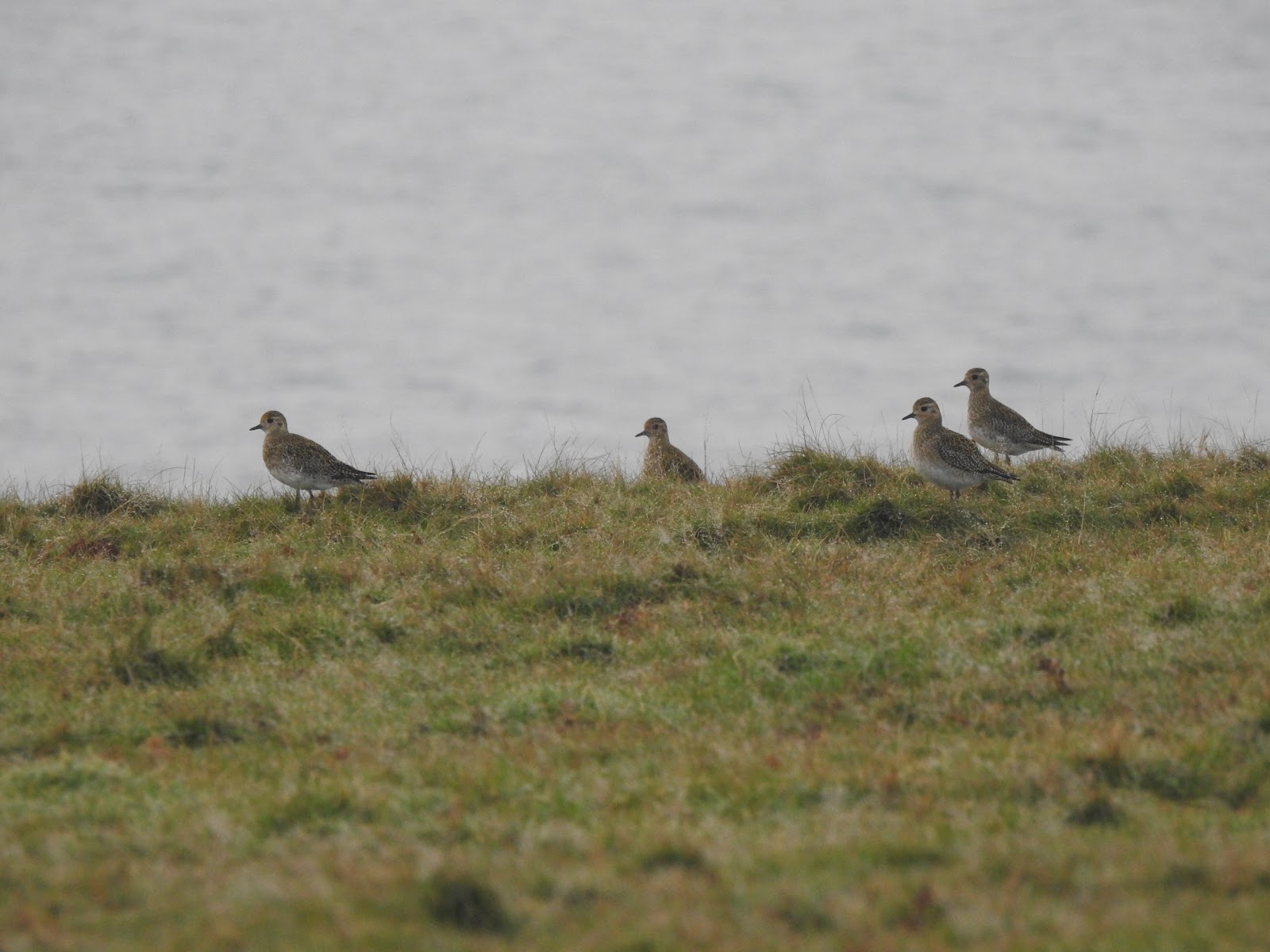
A few waders were still around after the cold weather Lapwing disappeared completely after 18 on the 19th and 28 on the 20th. 49 Golden Plover were seen on the 19th and 32 on the 20th before they too also left for the 21st. A small flock of five Golden Plover were seen calling and flying around the airstrip on the 22nd. Two Oystercatcher were in the Landing Bay on the 20th and a pair of Purple Sandpipers showed well at Brazen Ward. A small number of Snipe were seen including two heard in the evening of the 21st over the Village.

Purple Sandpipers, Brazen Ward © Paul Dean

152 Herring Gulls were in the farm fields on the 19th, the highest count since breeding birds left in August. Numbers remained around 60 on the 20th, 21st and 24th. A second calendar-year Yellow-legged Gull was with the Herring Gulls on the 21st.  48 Great Black-backed Gulls were counted on the 19th -the only double figure count of the week. There were also small numbers of Lesser Black-backed Gulls with 9 on the 19th being the highest count. A Black-headed Gull flew over Ackland’s Moor on the 19th.

Herring Gulls, Tillage Field © Paul Dean

A Sparrowhawk and Merlin were being seen around the South End of the island still. At one point they were seen fighting over South West Field. The Buzzard was seen up to the 22nd. The Jackdaw is still being seen around the Village.
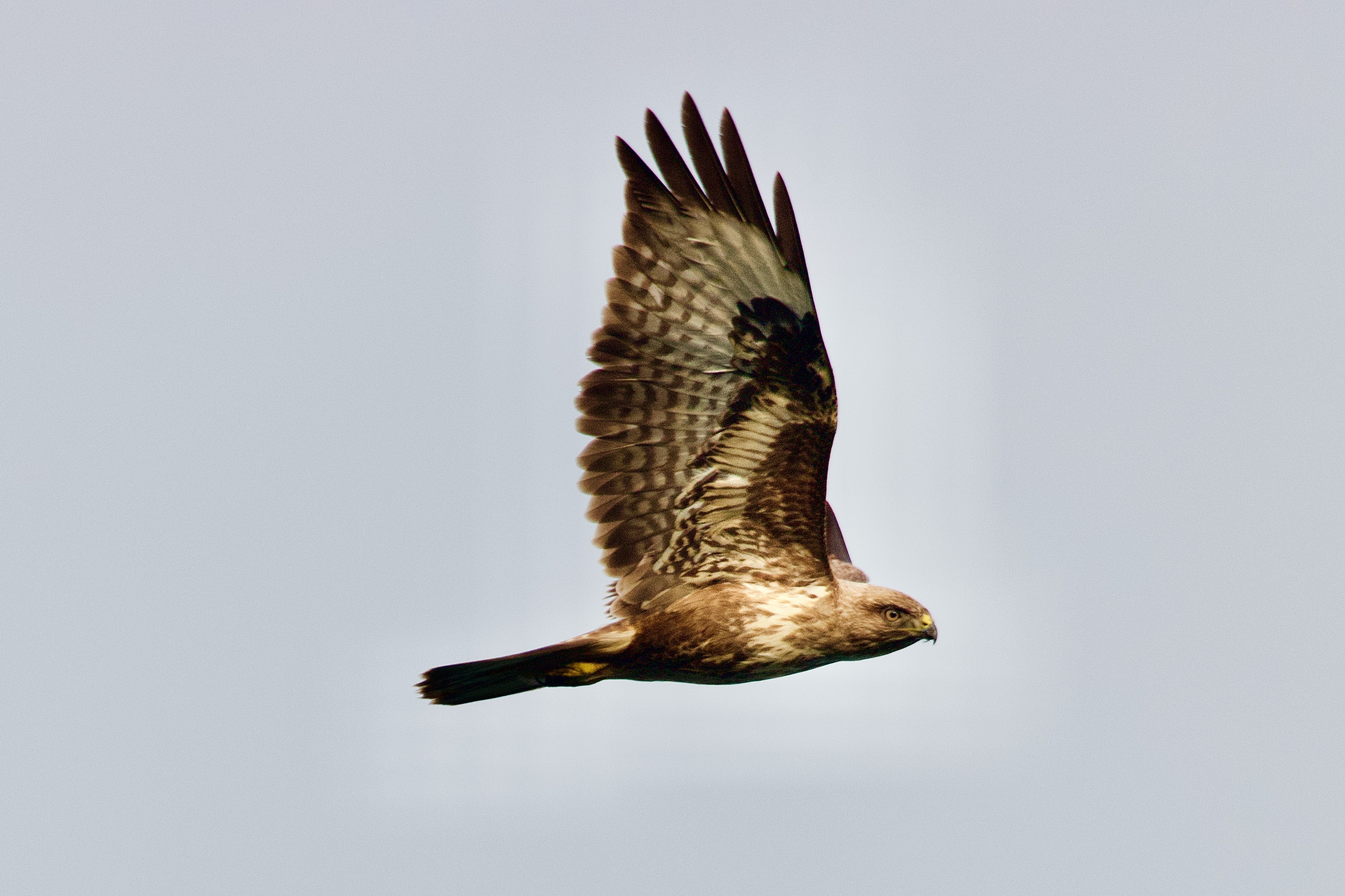
Buzzard © Paul Dean

One Goldcrest was heard in Millcombe on the 20th and 22nd and two were heard on the 21st. A Fieldfare were seen on the 19th and 21st. The number of Redwing and Song Thrush has dropped from last week. The highest counts were 11 Redwing and eight Song Thrush on the 22nd.  No Redwing have been seen on the since the 23rd. A single Skylark was seen in the 22nd.  A Pied Wagtail was in Barton Field on the 20th to the 24th. Three Meadow Pipit were recorded on the 24th.

There was a small arrival of finches on the 20th with 40 Chaffinch and a Siskin in Millcombe. This dropped again the next day with the next highest count of 19 on the 23rd.

In non-avian news, Pygmy Shrews have become increasingly active in the properties during the cold weather; the logbook is full of sightings including Hanmers, Old Light Lower and Stoneycroft.

Contributors: Stuart Cossey, Rosie Ellis, Paul Dean

Monday, 19 December 2022

Stuart Cossey reports on two weeks of cold weather on the island.

Winds mostly moderate to light from the north. Clear skies with one small scattering of snow. Mild from the 17th with strong winds from the south bring low cloud and constant light rain.

Nine Teal were seen at Pondsbury on the 16th. Of note was a Greylag Goose, only the 11th island record, seen in Brick Field on the 15th. It is very mobile but seen most days since. A small number of Woodpigeon have been seen with two on the 11th and then only singles on the 7th, 15th and 18th.

Teal, Pondsbury © Stuart Cossey

Greylag Goose, Lighthouse Field © Stuart Cossey

The cold weather brought flocks of wading birds over to the island. Four Lapwing and a Golden Plover were recorded on the 9th. This built up to 101 Lapwing and 49 Golden Plover on the 17th. The Lapwing had then dropped to only 19 on the 18th but all 49 Golden Plover were still present. These two species would have come to the island to escape the cold on the mainland and feed in the thawed out fields. A flock of Oystercatchers has been seen at the North End – 19 were counted on the 17th. A Jack Snipe was flushed by Pondsbury on the 8th and another was in Millcombe Pond on the 17th and 18th. A few Snipe were also present with a high count of 6 on the 8th.

Lapwing, Barton Field © Stuart Cossey

Golden Plover, Airstrip © Stuart Cossey

The number of gulls on the island built up during the strong winds towards the end of the two weeks. 110 Herring Gulls, 20 Great Black-backed Gulls, eight Lesser Black-backed Gulls and a 1st winter Common Gull were seen together in Lower Light House Field.  

A Buzzard was first seen in Millcombe on the 15th and has stuck around on the island. It is being constantly mobbed by Crows, Ravens and gulls as soon as it flies too close to the Village. Single Kestrel and Merlin have been recorded occasionally.  The Jackdaw is still present around the Village, it’s 8th week in the island.

Raven, Lighthouse Field © Rosie Ellis

A Chiffchaff was recorded on the 6th and 7th. The number of thrushes has varied over the weeks. There was a high count of 64 Fieldfare on the 15th and 57 Redwing on the 17th. This increase in numbers is also likely due to the frozen ground on the mainland forcing birds to move around.

The cold weather has also caused Rock Pipits to move up into the fields. 13 were counted on the 17th. Seven Meadow Pipits were seen on the 7th but as soon as the temperature dropped only one or two were seen. A Pied Wagtail was recorded on the 17th. Chaffinch numbers fluctuated with a high count of 21 on the 7th and only one on the 14th. Seven Goldfinch on the 7th were the last to be seen.

Contributors: Stuart Cossey, Rosie Ellis, Matt Stritch, Paul Dean

Monday, 5 December 2022

28th November to 4th December – The last ringing sessions of the year

Moderate winds from the east all week with mostly clear skies. Fairly mild with colder tmperatures towards the end of the week.

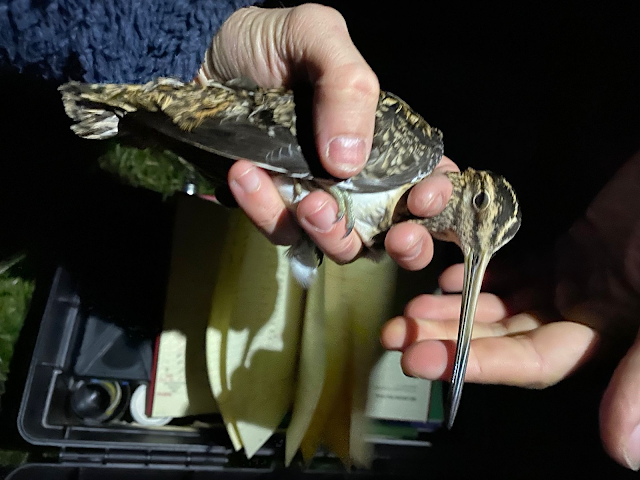
A total of seven Teal were seen on Pondsbury on the 3rd. A few waders were recorded with a single Golden Plover on the 28th and five on the 1st. Single Woodcock were recorded on the 28th, 30th and 4th. Three were recorded on the 1st including two well hidden in Smelly Gully. Attempts were made at ringing Snipe in the fields overnight. Although up to a few were seen, the full moon restricted our efforts. Two Snipe were successfully ringed whilst mist netting on the evening of the 4th.

Golden Plover, South West Field © Stuart Cossey

Well camouflaged Woodcock, Smelly Gully © Jamie Dunning

Ringing Snipe © Jamie Dunning

A feeding flock of at least 50 Gannets was seen off the East Side on the 30th. Three Cormorant flew south past Millcombe on the 29th and a Little Egret was seen flying out of the Landing Bay on the 2nd.

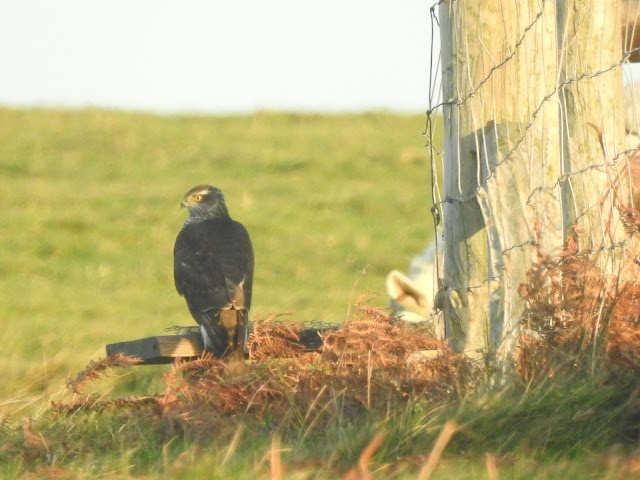
Sparrowhawk, Merlin, Kestrel and Peregrine were common sights all week. The Jackdaw was still around the Village. A high count of 26 Carrion Crows was recorded on the 28th. Up to five Skylark were still being seen in the fields north of the Village.

Sparrowhawk, Ackland's Moor © Stuart Cossey

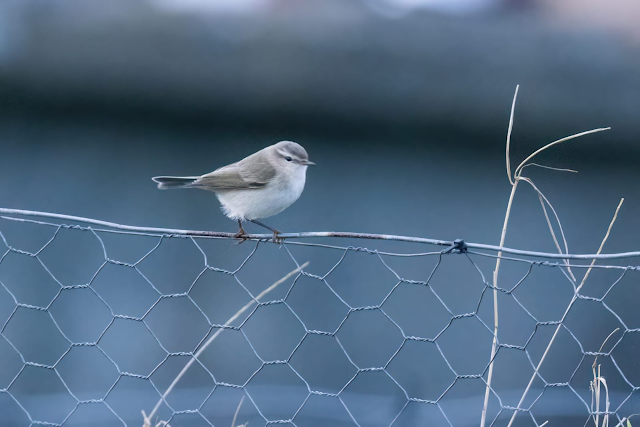
At least one Siberian Chiffchaff was seen and heard on the 29th and 30th. Siberian Chiffchaff are a subspecies of Common Chiffchaff from, as the name suggests, breeds in coniferous forests east of the Ural Mountains. They are a lot duller in colour and the call is different. During the light easterly winds the mist nets were opened in Millcombe on most mornings. Three Blackcap were ringed on the 30th. There was an increase in migrating thrushes, mostly Blackbird and Redwing, with a small number ringed.

Siberian Chiffchaff, Village © Jamie Dunning

Starlings were seen moving in big numbers on the 29th with 1140 counted including a single flock of more than 400 birds.  Finch numbers were low with the highest count of Chaffinch at 38 on the 28th. A Siskin and two Linnet were seen on the 29th and another Linnet was seen on the 4th. Goldfinch were also noted in small numbers.  A Lapland Bunting flew over South West Field calling on the 30th and a Reed Bunting was heard on the 1st.

Contributors: Stuart Cossey, Jamie Dunning, Trevor Dobie, Max Khoo

Monday, 28 November 2022

21st to 27th November – Strong winds bring an American Pipit

 A very blustery week with rain and strong northwesterly winds on the 21st and 22nd. Even stronger winds came from the west for the next two days before calming slightly and remaining dry for the end of the week.

A max count of 14 Mallard on the 23rd includes the nine birds frequently seen at Rocket Pole Pond as well as five at Pondsbury. Five Teal were on Pondsbury on the 23rd and four on the 25th. Two Woodpigeon were recorded in Millcombe on the 22nd to the 25th but went down to one on the 26th. A single Snipe was seen on the 23rd and a single Oystercatcher remains in the Landing Bay.

With the strong winds the number of large gulls recorded increased as flocks formed in the Village fields. Twenty Great Black-backed Gulls were counted on the 24th and 14 on the 26th. The highest count of Herring Gulls was 32 on the 27th and nine Lesser Black-backed Gulls were seen on the 24th and 26th. A Kittiwake was seen flying over Quarter Wall on the 26th. Three Great Northern Diver were seen together in the Landing Bay on the 24th and 25th with only one seen on the 26th and two on the 27th.

Great Northern Diver, Landing Bay © Stuart Cossey

Herring Gulls and Lesser Black-backed Gulls, Tillage Field © Stuart Cossey

A Sparrowhawk and Kestrel remain around the south of the island. The Merlin was seen again this week and on the 27th hunted a Skylark over Millcombe Valley. The Jackdaw is still present, now into its sixth week on the island.

Two Chiffchaff were recorded on the 25th, one on the 26th and three on the 17th. These birds may be new arrivals or could have been on the island for some time but difficult to locate in the strong winds. Two Goldcrest were heard on the 23rd with a single bird the rest of the week. Notable Starling passage was recorded on the 26th with a count of 600. Only a single Fieldfare was recorded on the 23rd and 25th. A single Redwing was recorded on the 21st, 22nd,23rd and 25th.

Two Black Redstart were reported on the 24th and one on the 23rd. A single White Wagtail arrived overnight on the 26th. The number of Meadow Pipit remained in single figures most of the week, and peaked at 17 on the 22nd. There was a surprise record of an American Buff-bellied Pipit flushed up from Pointless Wall on the 25th. If accepted by the British Birds Rarities Committee this would be the first record for the island after the likely contender in November 2021 was declared not proven.

Chaffinch numbers only peaked at 35 on the 27th. A small flock of four Goldfinches was seen by the Paradise Row bird feeders on the 27th after a pair and a single bird were seen on the 22nd.

In non-avian news, a Harbour Porpoise was seen off Rat Island during a seawatch.

Contributors: Stuart Cossey, Trevor Dobie

Tuesday, 22 November 2022

14th to 20th November – A Long-eared Owl ringed

Moderate westerly and northwesterly winds at the start of the week calmed briefly on the 19th before becoming strong again. It was mostly dry with rain on the 16th.

At least four Teal remained on Pondsbury all week with no other wildfowl of note. A single Woodpigeon was seen in Millcombe on four occasions. A number of Oystercatchers remain around the coast with a maximum of five on the 17th. Rain overnight on the 14th and 15th brought in a few Woodcock. One was in Millcombe Valley on the morning of the 15th and three were recorded on the morning of the 15th along with five Snipe. Two Great Northern Diver were seen on the 15th. One was feeding in the Landing Bay and the other flew low over Rocket Pole heading south.

A Merlin arrived on the 18th and was seen feeding around South West Field again on the 20th. The Hen Harrier was seen up until the 18th with no sign since.  At least one Sparrowhawk and Kestrel continue to hunt around the south of the island, often targeting tired migrant Chaffinch. On the morning of the 18th an alarm calling Blackbird alerted to the presence of something in the Blackthorn at the top of Millcombe. On inspection a Long-eared Owl flew out of cover and tried to land in the Pines before being chased by Crows over towards St John’s Valley. That evening , mist nets were put up in St John’s Valley and a juvenile female Long-eared Owl was ringed. This is only the fifth to be ringed on the island, the last in 2008.

Long-eared Owl, St  John's Valley © Stuart Cossey

Hen Harrier, Quarter Wall © Stuart Cossey

Possibly the last Blackcap of the year were seen on the 17th, with three in Millcombe. Five Chiffchaff were counted on the 15th with four on the 19th and 20th. Two Goldcrest are still being seen regularly in Millcombe.

Calm weather on the 19th encouraged some passerine migration. Thirteen was the highest count of Skylark all week. Starling were also on the move with totals of 485 on the 17th and 450 on the 19th. There was a big arrival of Blackbird on the 19th with at least 59 seen around the southern end of the island. The highest counts of Fieldfare and Redwing were on the 17th with 34 and 229 respectively. A single Mistle Thrush was by Pointless Wall on the 14th and 15th.

There continue to be occasional sightings of Black Redstart . Three were recorded on the 14th, two on the 15th and a single on the 19th. Three Pied Wagtail were seen in Barton Field on the 14th with only single flyovers on the 14th, 15th, 17th and 19th. Rock Pipits are starting to be more common in the fields on top of the island as the rough weather forces them away from their usual coastal feeding grounds. On calmer days small numbers of Meadow Pipits are seen flying south with 25 on the 15th and 22 on the 19th. An Olive-backed Pipit was heard flying over the Stonecrusher on the 18th, if accepted by the British Birds Rarity Committee, this would be the fifth record for Lundy.

Chaffinch are still passing through the island with over 150 counted on the 14th and 16th and a high count of 308 on the 19th. Brambling were occasionally heard with passing Chaffinch flocks including three on the 19th, two on the 14th and singles on the 15th, 16th and 17th. Other finches are less common with two Linnet on the 14th and a Lesser Redpoll on the 29th. Ten Siskin on the 14th was the highest count all week with three days without any records. Five and six Goldfinch were seen on the 14th and 15th.  A female Reed Bunting was by Pointless wall on the 15th and 16th.

Reed Bunting, Pointless Wall © Stuart Cossey

In non-avian news, a Hummingbird Hawk-moth was shooed out of the Shop on the 18th. Without a frequent boat and fewer visitors the Grey Seals in the Landing Bay are hauling out and sleeping all over the place, including the Jetty!

Grey Seal, Jetty © Stuart Cossey

Contributors: Stuart Cossey, Richard Ware, Sue Waterfield

Tuesday, 15 November 2022

7th to 13th November – First Barn Owl record since 1981

Strong winds continued from the southwest all week with calmer winds from the southeast on the 12th.

The Wigeon remained on Pondsbury until the 8th with three Teal seen on the 8th and 12th. At least 16 Mallard are present on the island with flocks at Rocket Pole Pond and Pondsbury. A single Woodpigeon was seen in Millcombe on the 8th, 9th and 12th. A flock of 10 Oystercatcher were at the North End on the 12th and a Lapwing was seen over the Village and in Tillage Field on the same date. Snipe were recorded on the 10th, 12th and 13th. The Little Egret was seen again in Millcombe Pond on the 8th. A Purple Sandpiper was seen on Rat Island on the 8th. It is likely that Purple Sandpiper are quite common on Lundy in winter but are difficult to see as the spend most of their time around the back of Rat and Mouse Island.

Flocks of feeding gulls were seen off the East Side on the 9th, 10th and 12th. These mostly comprised of Kittiwakes with 600 counted on the 9th. A single flock of 54 Herring Gulls were on Miller’s Cake on the 13th. Three Manx Shearwaters and a Balearic Shearwater flew past Rat Island on the 10th along with 70 unidentified Auks.

Two Sparrowhawk remain on the island, occasionally being seen together over Millcombe hunting exhausted migrant Redwing and Chaffinch. Two Kestrel have also been seen. The juvenile Hen Harrier has been seen hunting over the Quarter Wall area all week, occasionally flushing up Snipe and thrushes. The Jackdaw has also been seen all this week. Most surprising this week was a Barn Owl, which was heard screeching over the Village at 17:30 on the 13th. This comprises the 10th island record and first since 1981. Most records have been in November and most likely involve young birds dispersing to find new territories.

Hen Harrier, Tillage Field © Stuart Cossey

Single figure counts of Skylark were seen most days with a high count of 20 on the 12th. A Swallow was recorded around Jenny’s Cove and the Earthquake on the 12th and 13th. Blackcap are still being recorded with 10 counted on the 12th. Two were recorded on the 7th, singles on the 8th and 9th and four on the 13th. Single Chiffchaff were recorded on the 7th, 8th and 9th, then four and five were counted on the 12th and 13th respectively. Low numbers of Goldcrest continue to be recorded in Millcombe and Quarter Wall Copse. A Yellow-browed Warbler was seen near the Terrace on the 12th.

There has been a noticeable increase in migrant thrushes, though still not the large numbers expected at this time of year. The highest counts were on the 12th and 13th. 23 Blackbird and 65 Redwing were recorded on the 12th. 160 Redwing were recorded on the 13th along with two Mistle Thrush and 11 Fieldfare. The highest count of Song Thrush was three on the 8th.

Single Black Redstart were recorded on the 8th and 13th. A total of four were seen around North Light on the 12th. A Grey Wagtail was seen at Millcombe Pond on the 12th. A White Wagtail was in Barton Field from the 7th to the 9th. On the 13th, three Pied Wagtails were seen in Barton Field.

Black Redstart, Landing Bay © Stuart Cossey

Finch migration has been steady all week with a big movement on the 12th including 1036 Chaffinch, four Brambling, 178 Siskin and 24 Linnet. Around 100 Chaffinch were counted the rest of the week. A small flock of three Lesser Redpoll were seen on the 9th. A Reed Bunting was by Pondsbury on the 8th.

Siskin, Millcombe © Stuart Cossey


In non-avian news, a Small White butterfly was seen in Millcombe on the 12th and a Hummingbird Hawk-moth was in the same area on the 13th. Grey Seals continue to haul out on Landing Bay Beach, allowing good views from the road, if you remain quiet.

Grey Seal, Landing Bay © Stuart Cossey

Contributors: Stuart Cossey, Matt Stritch, Ruth Turner, Paul Godwin

Monday, 7 November 2022

31st October to 6th November – A brief window of calm amidst strong winds

Strong winds from the southwest all week until lessening on the 4th and turning northerly on the 5th. Quickly back to strong southwesterlies on the 6th. Rain, sometimes heavy, on most days but usually passing through quickly.

The Wigeon remained at Pondsbury again this week, being seen on the 31st and the 4th. A single Teal was also present on the 4th. Despite the many thousands of Woodpigeon migrating across the country only one was recorded from the 2nd to the 4th. A Stock Dove was seen flying over Ackland’s Moor on the 4th. Also on the 4th, a Lapwing flew over the Village and a Golden Plover was calling over High Street Field. At least two Water Rail continue to be heard in Millcombe Valley. The Jackdaw was still being seen up to the 6th.

216 Kittiwakes were counted during a seawatch on the 2nd along with one Manx Shearwater and 59 Gannet. A Great Northern Diver arrived in the Landing Bay on the 2nd and has been seen up to the 6th, often right under the Jetty. A Little Egret, only the second of the year, was seen roosting in Millcombe on the evening of the 5th and then again in multiple locations on the 6th.

Three Sparrowhawk were noted on the 3rd with two or one the rest of the week. At least two Kestrel were present all week. The juvenile Hen Harrier was seen on the 31st and then again over Pondsbury on the 3rd.

Sparrowhawk, Millcombe © Stuart Cossey

Kestrel, Millcombe © Stuart Cossey

A single Swallow was seen on the 31st and again on the 1st around Quarter Wall. Sadly it seemed to be struggling in the strong winds and was feeding on the ground with a flock of Starlings. Two Chiffchaff were present on the 3rd with singles on the 31st, 1st and 4th. Blackcap are still trickling through, the highest count being nine on the 3rd. Fewer Goldcrest are being seen with high counts of eight on the 31st and the 3rd. The bird of the week has to be the somewhat surprising Pallas’s Warbler which turned up in the mist nets in Millcombe on the 3rd. This 6.2g bird would have come all the way from Siberia and is only the 7th record for Lundy.

Pallas's Warbler, Millcombe © Stuart Cossey

With the winds turning northerly on the 4th, thrushes started pushing south. 166 Redwing, 39 Fieldfare, seven Song Thrush, 30 Blackbird, two Mistle Thrush and a Ring Ouzel were counted. Lower counts were had the rest of the week. A Ring Ouzel was also recorded on the 31st. Black Redstart were a common theme of the week with three on the 1st, two on the 3rd and 6th and one on the 2nd.

Redwing, Quarter Wall © Stuart Cossey

Black Redstart, Benjamin's Chair © Stuart Cossey

Four White Wagtails were recorded in Barton’s Field on the 31st and one remained on the 1st. Grey Wagtails were seen on the 3rd and 4th. Chaffinch are still on the island in big numbers though they are slowly leaving. 772 on the 31st became 378 on the 1st and then dropped to 76 on the 5th. Flocks were moving through in before a rain front on the 6th resulting in a count of 305. Numbers of other finches are still shockingly low. Single Brambling were recorded from the 1st with two on the 5th. The high count of Goldfinch was eight on the 31st and similarly only two Linnet were seen on the 31st and then the 4th. 25 Siskin were recorded on the 31st but numbers in November have so far peaked at seven on the 3rd. One Lesser Redpoll was seen on the 31st and another on the 1st. A Reed Bunting was seen at Pondsbury on the 31st and again on the 3rd and 4th. A Snow Bunting was on the main track towards the North End on the 3th.

In non-avian news, two Painted Lady were seen on the 31st and singles on the 1st and 4th. A Vagrant Emporer Dragonfly was seen at Pondsbury on the 31st. A single Harbour Porpoise was off the South Light on the 1st.

John Hedger and Mandy Dee have been over on the island this week and led a fungus foray on the 3rd with 39 species found including Meadow Puffball, Scarlet Waxcap, Orange Waxcap, Snowy Waxcap and Yellow Club. They have also identified seven new species for the island during their stay.

Contributors: Stuart Cossey, Chris Baillie, Chris Dee, Mandy Dee, John Sealy, John Hedger