About this page...


You're now viewing the old Lundy Bird Observatory blogspot. Explore the new website for all your favourite island news and wildlife updates. If you have sightings to report, please consider sharing your observations or photographs with the Bird Obs team here.

Monday, 18 July 2022

11th to 17th July – The Lundy Marine Festival 2022

Marine Festival Volunteers Daisy Laing and Tara McEvoy-Wilding bring us a marine sighting special to coincide with the start of the Lundy Marine Festival.

It was really hot this week with a red-warning heatwave. Temperatures reached 27.8° on the 17th. There was very little wind making it seem even hotter.  

This week saw the start of Lundy’s much anticipated marine festival, celebrating the 50th anniversary of its Marine Protected area. The long weekend kicked off on Thursday with the arrival of some of our fantastic supporters: The Porcupine Marine Natural History Society, The Marine Biological Association, The Blue Marine Foundation, MARINElife, Sea Watch Foundation and The Natural History Museum.


Activities began immediately with the arrival of the marine experts who jumped straight into a BioBlitz of Lundy’s extensive rocky shore, focusing on a location known as Devils Kitchen. Members of the Marine Biological Association and the Natural History Museum collected samples for the Darwin Tree of Life Project, aiming to sequence the genome of the specimens obtained. The Porcupine Society compiled a list of organisms, many of which required microscopic study in the St Helens pop up marine biology lab. Alongside this visitors were able to join in with cetacean watches directed by the Sea Watch Foundation, occurring on the southwest coast of Lundy. Harbour Porpoises were seen frequently.

The BioBlitz continued into Friday, which saw two snorkel safaris led by the Islands warden Rosie Ellis. The snorkelers spotted some fantastic species including Spiny Starfish, Star Ascidians, Dead-man’s Fingers and Plumose Anemones, not to mention the large school of sand eels, or as Rosie calls them “puffin food”. On Friday evening our Marine expert talk was hosted by Dr Keith Hiscock about why Lundy’s marine life is so special, as well as the development of conservation and changes to marine life over the past 50 years.

Data collection on the rocky shore continued into Saturday with the discovery of the non-native marine algae species Green Sea Fingers (Codium fragilis), commonly mistaken with native Velvet Horn Seaweed (Codium tomentosum). Further microscopic examination revealed the specimen to be C. fragilis, identified by a small triangular point at the end of each frond. The St Helens centre pop up lab also had virtual reality headsets used to experience diving with Lundy’s curious seals, as well as interesting exhibitions which were praised by the public.

The marine experts continued identifying specimens throughout Sunday. During the afternoon, a rockpool ramble was held by wardens at Devils kitchen, for the public to explore Lundy’s marine life up close. Some interesting species were spotted Including a Worm Pipefish, Velvet Swimmer Crabs and a whopping 56 Celtic Sea Slugs.

On to the birds and Swifts are continuing to be seen every day. A high count of 12 were seen on the 11th. A few more Curlew were seen with singles flying over on the 13th and 14th. A Cormorant flew past the Terrace on the 13th and Grey Heron flew past Jenny’s Cove being mobbed by all the gulls on the 16th.

The cliffs are getting quiet with most seabirds now headed out to sea. A max count of 485 Puffins were on the sea at Jenny’s Cove. The Kittiwake chicks at our study plot are growing well with most near to fledging.

Most surprisingly this week was a Merlin which flew over Quarter Wall during the morning census. This is only the 3rd July record on the island with the last being in 2002.

The Swallows have fledged from the church porch and a new pair have made a new nest above the entrance. Meanwhile individuals from further north have started to pass through with a high count of 16 on the 17th. 

The male Song Thrush that has been singing in Millcombe since April has finally stopped after unsuccessfully finding a mate. A Grey Wagtail flew over Millcombe on the 11th and a Tree Pipit flew over on the 13th.

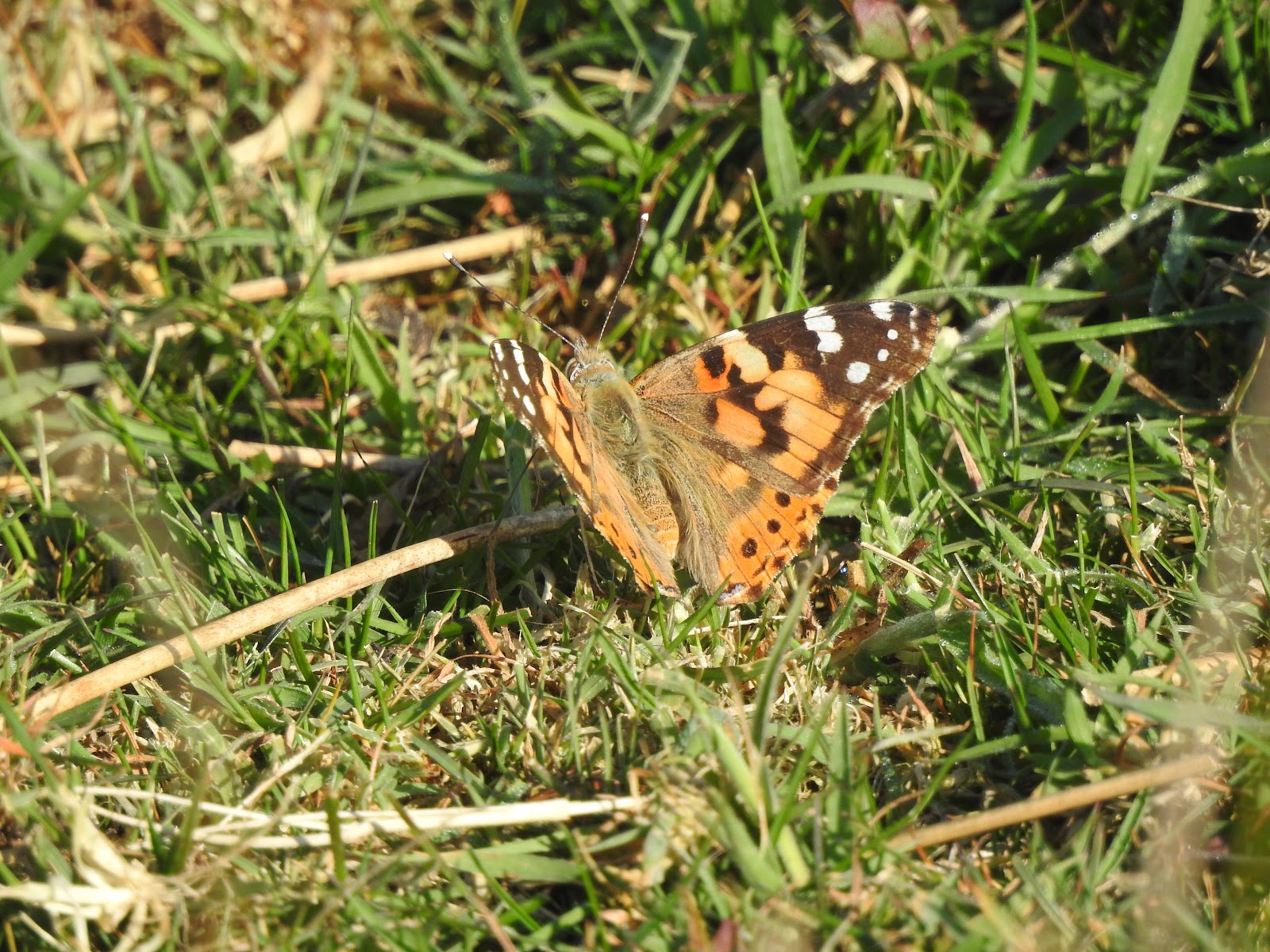
The first Clouded Yellow of the year was seen on the cliffs below Old Light on the 11th. Two Hummingbird Hawk-moths and a Painted Lady were seen on the 13th.

The moth trap has been busy in Millcombe with species including Devonshire Wainscot, Antler and Common Wave, which is new for the island.

Contributors: S Cossey, R Ellis, Z Wait, D Laing, T McEvoy-Wilding, C Blackmore, S Blackmore, S Bosanquet

Monday, 11 July 2022

4th to 10th July – Feeling hot

It has been clear, calm and dry all week with temperatures regularly over 20° and little wind. The highest temperature was 23.4° on the 10th.

A total of 21 Mallard were counted on the 8th, the highest count of the year not including young ducklings. Swift have been a regular occurrence all week with a the highest count on the 9th with nine seen in two groups. A Collared Dove was recorded on the 8th and the number of Woodpigeon on the island has increased to six on the 9th

A few waders were seen passing through this week. A Curlew flew over the village on the 8th. Also on the 8th was the islands 130th species for the year, a Redshank on Pondsbury.

Four Black-headed Gulls off Benjamin’s Chair on the 9th were the best of any seawatching. Cormorants were logged on the 5th with two over South West Field and another on the 8th. Five Grey Heron were seen over the East Coast on the 5th.

The Kestrels have now left the Old Light slopes and are exploring the island with sightings from the North End, Quarries, West Coast and Castle Hill. Young Peregrines continue to be noisy all along the coast. A Rook was seen flying south over the Landing Bay on the 10th.

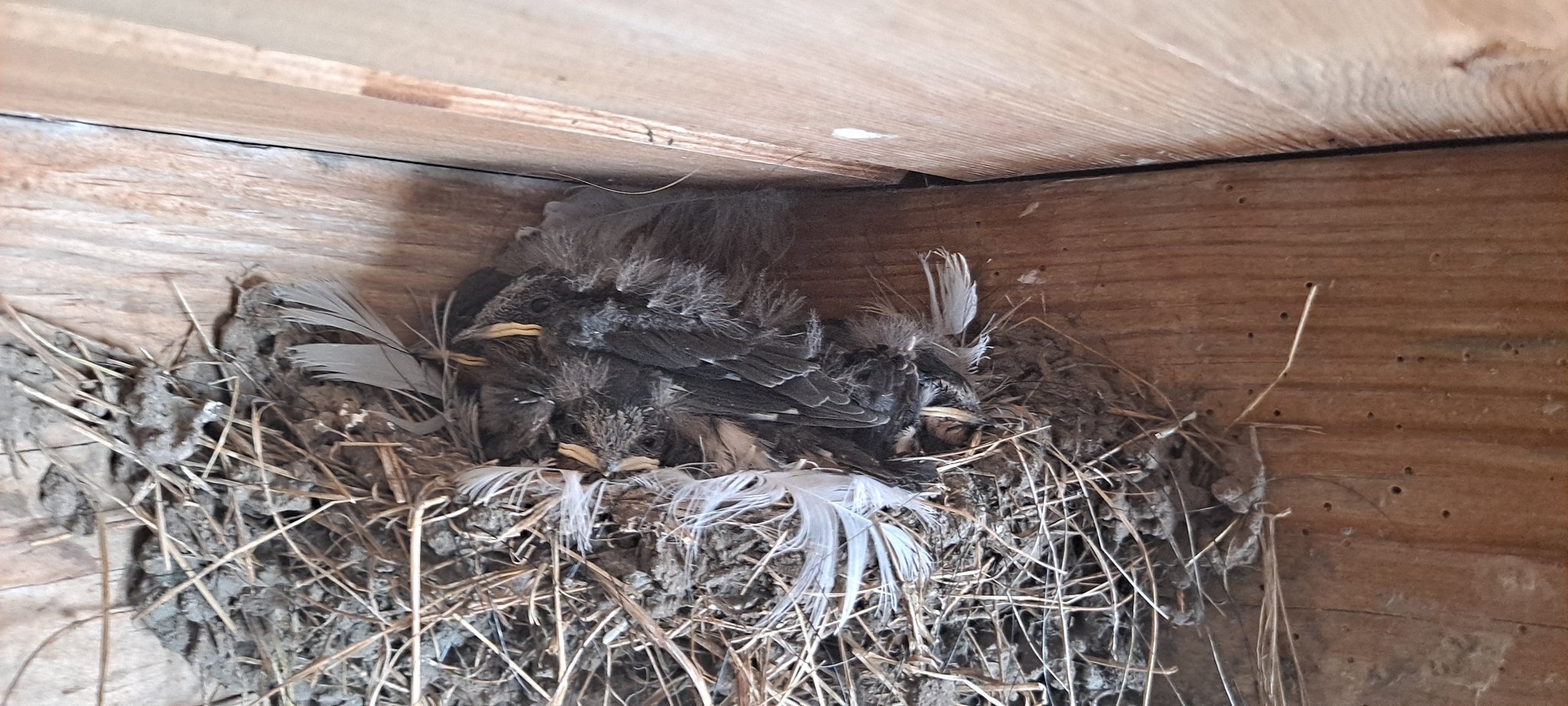
The Swallows in the Church have five big chicks whilst the pairs by Old House North and the Gas Store are still on eggs.

Swallow chicks, Church © Stuart Cossey 

A Willow Warbler was seen in Millcombe on the 8th along with a Whitethroat. A Spotted Flycatcher was below Brambles Villa on the 8th. Young Wheatears continue to move south with 17 recorded during the morning transect below Quarter Wall on the 9th. A Grey Wagtail was reported on the 5th. Linnet numbers continue to grow with 104 counted on the 6th and 101 on the 9th.

In other two new micro moths for the island were recorded this week including European Corn-borer Ostrinia nubilalis and Red-barred Tortrix Ditula angustiorana.

Red-barred Tortrix © Stuart Cossey

Contributors: S Cossey, R Ellis, Z Wait, T Thompson.

Monday, 4 July 2022

27th June to 3rd July – More signs of breeding success

The weather was mild and overcast all week with rain on most days. Wind was from the west averaging at around 20mph.   

A high count of 10 female, three male and a large juvenile Mallard were on Pondsbury on the 3rd. Low numbers of Swift were seen all week with three on the 30th and 3rd, two on 28th and 1st and singles on 29th and 2nd. A Cuckoo was seen in Millcombe on the 27th and 28th.

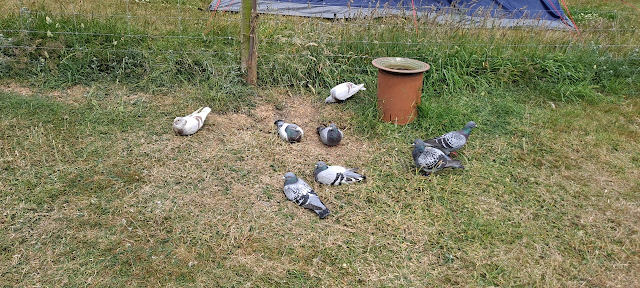
The Racing Pigeons are still hanging around the Camping Field. A total of 11 were seen on the 2nd but only 10 on the 3rd after one of the South End juvenile Peregrines was seen over the Village. A Collared Dove was singing in Millcombe on the 2nd.

A Black-headed Gull flew over the Landing Bay whilst waiting for the MS Oldenburg on the 30th. During a boat trip up the East Side on the 1st, 19 adult and four juvenile Oystercatchers were counted. There were also high numbers of juvenile Shags with at least 30 seen. Many of the Guillemots, Razorbills and Puffins have now successfully fledged young and it won't be long before they all head back out to sea and the cliffs are quiet.

Two Grey Heron were seen flying in by Quarry Beach on the 29th and another was over the Landing Bay on the 2nd. The Kestrel pair have successfully raised two chicks with the fledglings seen practicing their flying near the Battery, much to the dislike of the Herring and Lesser Black-backed Gull colony. Many of the Peregrine pairs have also got fledged young. Young birds of prey usually stay with their parents for a few weeks learning the hunting techniques they will need to survive.

A Sand Martin was reported on the 3rd and the first returning Willow Warblers were recorded on the 1st and 2nd. Breeding has finally been confirmed for the Millcombe Chiffchaff pairs. A young bird was seen on the 1st by the Gas Store, meanwhile another pair are busy feeding young in Millcombe Wood. Whitethroat are still being seen around Millcombe with four juveniles counted below Millcombe House on the 27th.

Meadow Pipit and juvenile Wheatear appear to be everywhere at the moment, particularly along the West Coast. Linnets are also forming into flocks with 20 regularly seen feeding on the Pineappleweed by the Pig Sty. A Siskin was heard in Millcombe on the 1st.

Juvenile Wheatear, Benjamin's Chair © Stuart Cossey

The Manx Shearwater nest boxes were checked on the 29th. Of the 12 that contained an egg in May, nine have hatched, two are still being incubated and unfortunately one has been abandoned. 

Manx Shearwater chick © Stuart Cossey

Fewer butterflies and moths were seen during the overcast days. Single Hummingbird Hawk-moths were seen on the 30th and the 1st. A Speckled Wood was reported on the 29th and 1st, a scarce butterfly on Lundy. Painted Ladies were seen on the 29th and 30th and  Grayling on 29th and 1st. Meadow Brown are the most common butterfly at the moment with 30+ being recorded each day. The first Common Darter and Blue-tailed Damselflies were seen by Pondsbury on the 3rd. 

Snorkel safaris were led by the conservation team on the 1st and 3rd. Highlights included Ballen Wrasse, Spiny Starfish, Lightbulb Sea Squirt and Spider Crabs.

Due to the increased risk of Avian Influenza in seabirds we have decided to stop all seabird ringing activities. We are taking extra care during any monitoring work and keeping an eye out for any dead birds. Whilst on Lundy please report any dead seabirds to a member of staff. If you see a dead or dying bird anywhere in the UK call DEFRA on 03459 335577. Do not touch any dead or dying birds.

Contributors: S Cossey, R Ellis, Z Wait, A Rowland, P and L Chapman.

Tuesday, 28 June 2022

20th to 26th June – Strong summer winds

The wind was calm to start the week but picked up on Friday reaching up to 45mph. It was clear and warm up to the 22nd when it turned overcast with frequent showers.   

Mallards are still having young on the island with a new brood of nine ducklings seen by the Church Field ditch. Swifts were common this week with a high count of 29 seen screaming above the Village on the 23rd. An unexpected bird was seen on the 24th, a Quail was flushed by the path in South West Field. This small gamebird is only a bit bigger than a Skylark but spend the winter in Africa.

There was a noticeable movement of Grey Heron on the 21st. Four were seen flying west over Ilfracombe as the boat was boarded in the morning. Meanwhile three flew over the island and another two were seen flying over in the evening. Two Collared Dove were seen on the 22nd and the number of lost Racing Pigeons by Paradise Row increased from seven to 11 on the 25th.

Racing Pigeons, Paradise Row © Stuart Cossey

Most of the Swallows seen this week were the resident birds with the pair in the Church Porch now with small chicks. A single Sand Martin was seen on the 23rd. There is still no confirmed breeding from our Blackcap or Chiffchaff pairs, however there were at least two juvenile Whitethroat still by the Ugly on the 23rd.

A Rosy Starling was seen briefly by the Pig Sty on the 21st but did not hang around unlike the bird earlier in the month. Another island rarity at the Pig Sty was a male Yellowhammer on the 23rd. Some small finch passage was obvious on this week with a male Siskin present on the 23rd to the 25th. Five Goldfinches have been regularly seen feeding on the Thistles by the Water Tanks every morning in addition to the three families in Millcombe.

Goldfinch, Ackland's Moor © Stuart Cossey 

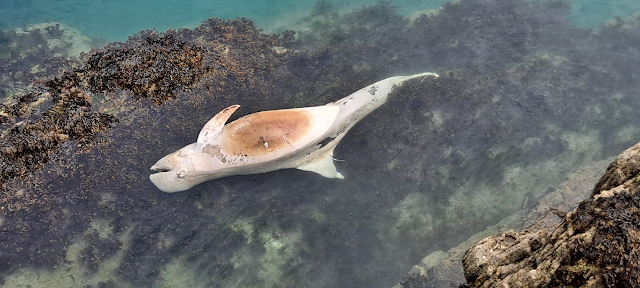
Away from the birds, a large influx of Hummingbird Hawk-moths was seen on the 22nd with at least six seen across the island. At one point there were four at once on the Valerian in Millcombe. A Minke Whale was seen during the crossing on the 23rd and numerous Common Dolphins were recorded during the outward crossing on the 21st. In sadder news a 4m long dead Risso’s Dolphin was washed up by the Jetty on the 23rd much to the interest of the visitors coming off the MS Oldenburg. 

Hummingbird Hawk-moth, Millcombe © Stuart Cossey 

Risso's Dolphin, Landing Bay © Stuart Cossey

Contributors: S Cossey, R Ellis, Z Wait

Monday, 20 June 2022

13th to 19th June – Start of snorkel safaris

Winds were from the north and west this week with highs of 35mph on 18th and 19th. Heavy rain on the 18th and 19th. The rest of the week was bright and sunny with maximum temperatures of 21° on 16th and 17th..  

The number of Teal duckling on Pondsbury had dropped to two on the 15th. Swift are still moving in small numbers with 13 on the 13th, six on the 15th and eight in the 17th. A Water Rail was heard by Pondsbury on the 13th. A Grey Heron was seen on the 16th. The Kestrel pair are still being seen hovering and hunting across the island.

Hirundine passage is continuing in the hot summer weather with 35 Swallows, a Sand Martin and three House Martin recorded on the 13th. Only the six resident Swallows were then seen up to the 19th.

The male Chiffchaffs continue to sing across the island with one in Millcombe, St Helen’s Copse and the Terrace on the 15th. A Reed Warbler was singing in Millcombe on the 13th and the first juvenile Whitethroats were seen at the top of Millcombe by the Ugly.

Three broods of Goldfinch and Chaffinch are now being seen around Millcombe and the first Pied Wagtail chicks have been seen by the Pig Sty and Lambing Shed.

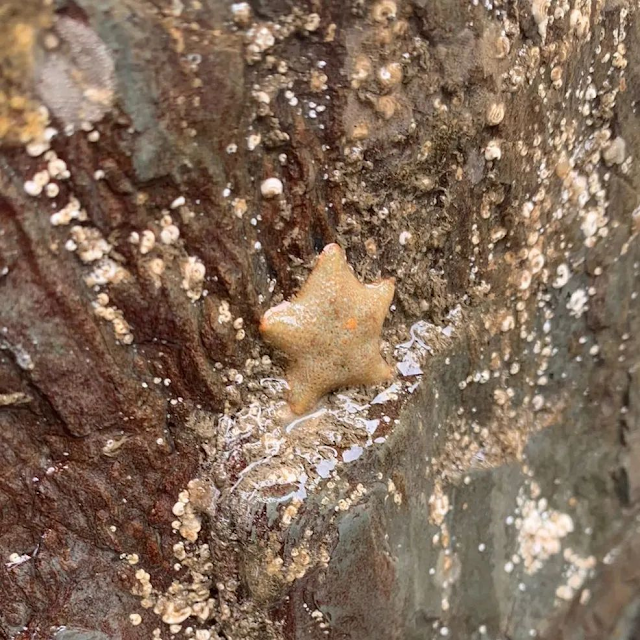
In non-avian news, the first snorkel safaris have started and there were a few rockpooling trips around Devil’s Kitchen during low tide. Species seen whilst snorkelling include Spider Crab, Compass Jellyfish and Grey Seals. In the rock pools were 5 species of crab including a Hermit Crab, some Cushion Stars and five Celtic Sea Slugs, which have only recently been discovered on Lundy. 

Celtic Sea Slug, Devil's Kitchen © Stuart Cossey

Cushion Star, Devil's Kitchen © Stuart Cossey 

Contributors: S Cossey, R Ellis, Z Wait, J Dunning, L Paulson

Tuesday, 14 June 2022

6th to 12th June – A rose-coloured visitor

Moderate westerly winds for most of the week. Generally overcast with occasional rain showers. The average temperatures remained at around 15° each day. 

A single Mallard duckling is still around on Barton Pond, fingers crossed that it is now big enough to avoid most predators. Only four Teal ducklings were seen on Pondsbury this week. A second female was also seen and undertaking distraction displays, potential suggesting another brood is present. Two Canada Geese were seen on the 10th flying high west over Southwest Field.

A single Swift was seen over Millcombe on the 11th and a Cuckoo was flying around the south of the island, including Millcombe, Rocket Pole and Brick Field. Three Collared Doves were seen again on the 6th. The highest count of Woodpigeon for the month was six on the 11th.

Puffins are still very busy around the West Coast, particularly Jenny’s Cove, with most feeding chicks. Large numbers of Manx Shearwater have been seen off the Ugly in the evenings this week as they gather before coming into their burrows.

A Sparrowhawk was seen over the Village on the 7th and the male Kestrel has been seen all week going back and forth with food to the nest on the West Coast.

A recently fledged Carrion Crow was hopping on the floor in Millcombe. It was ringed and then placed back into the undergrowth under the watchful eye of the parents. A high count of 14 Ravens was seen on the 7th, this includes a number of juveniles that have now come around Barton Field to find food.

Singles of Sand Martin were seen on the 10th and 11th. Four House Martin were seen on the 6th with a single on the 9th and two on the 12th. Swallow numbers are starting to increase again as non-breeding and failed breeding adults are heading south. A total of 16 were logged on the 12th. The resident pairs have still not laid eggs but there are now potentially four different pairs present.

The odd migrant warbler is still turning up with a Willow Warbler heard on the 7th. There was a surprise find of breeding Sedge Warblers in Quarter Wall Copse on the 8th – a male was present along with two young birds calling. Blackcaps were singing in Millcombe and Quarter Wall Copse and at least two pairs of Whitethroat are busy with young in Millcombe. Three singing Chiffchaff were heard in suitable breeding habitat along the East Coast and Millcombe on the 9th.

The bird of the week was a Rosy Starling found by Richard and Rebecca Taylor by Old Light on the 6th. It was later seen in Barton Field and stuck around until the 8th. It was a stunning male in full pale pink plumage.

Rosy Starling, Barton Field © Stuart Cossey

Rosy Starling, Old Light © Stuart Cossey

Singles of Spotted Flycatcher were recorded on 6th,7th and 9th with two present on the 8th. The Wheatear breeding season has gone well with juveniles seen all along the West and East Coast as well as Ackland’s Moor. A single White Wagtail was recorded at the North End on the 7th and another by the Water Tanks on the 9th and 10th.

A Lesser Redpoll heard calling from the top of Millcombe on the 7th was the best finch of the week. Another brood of juvenile Goldfinch have fledged with a total of six seen in  Millcombe on the 8th.

Lesser Redpoll, Millcombe © Stuart Cossey

Thursday saw the departure of our volunteer Assistant Warden Laura Pirateque. She has been working hard the last few months monitoring our Puffins and other seabirds, as well as any other jobs we could find!

A ridiculously high count of 130 Painted Lady were recorded on the 6th with numbers dropping back to four and eight over the next two days. Also recorded on the 6th were five Hummingbird Hawk-moth and three Silver-Y. The moth trap the next morning was the best of the year so far with 31 species including Cinnabar, Brussels Lace, Chinese-character and the rare micro-moth Nothris congressariella which is only found on Lundy, Isles of Scilly and parts of Cornwall on its food plant, Balm-leaved Figwort. 

Nothris congressariella © Stuart Cossey

Marine life seen included a rare jellyfish Neoturris sp. which are usually found in the deep waters of the Atlantic. 

Neoturris sp., Landing Bay © Stuart Cossey

Contributors: S Cossey, R Ellis, Z Wait, L Pirateque, J Dunning, R Taylor, R Taylor, C Baillie, S Waterfield

Monday, 6 June 2022

30th May to 5th June – Starting June with some much needed rain

Hot, calm and dry all week until strong easterly winds and rain arrived on Saturday and Sunday. Highest temperatures recorded was 18° on the 3rd June. 

May is generally considered the one of the best months of the year for migration on Lundy. This year 96 species were recorded with highlights including a Bluethroat, Wood Warbler, Osprey, Blue-headed Wagtail and the islands first Mandarin.

A small flock of four Shelduck were seen flying out of the Landing Bay as the MS Oldenburg arrived on the 2nd and then two were seen on the 3rd flying up the East Coast.

A Cuckoo was present on the island on the 30th. It was first seen on the wall by Old Light and then later flying over the Pig Stys being chased by a Peregrine before disappearing down over the East Side. Low numbers of Swift were recorded this week with three on the 2nd and one on the 4th. Three Collared Dove were seen together in Millcombe on the 5th, clearly arriving during strong easterlies on the 4th. Three Black-headed Gull were seen in the Landing Bay on the 4th.

Dunlin were the only notable waders to be seen this week with one on the 3rd and 5th and a small flock of six on during rain and strong winds on the 4th. One of the Oystercatcher pairs on Rat Island are now looking after two small chicks. They are now at their loudest, calling every time a gull or Crow come near.

The best bird of prey this week was a Honey Buzzard which flew north over Acklands Moor on the 2nd. It was also seen by visitors at Millcombe and the East Coast but identified as a pale Common Buzzard. The Kestrel pair are still busy feeding young and can be seen hovering over fields all over the south of the island.

It appears that three pairs of Swallow are nest building on the island at the moment, but we are still awaiting the first eggs. Small numbers of Swallows, Sand Martins and House Martins have been passing through this week. Two Sand Martins were seen on the 30th and 2nd, with singles on 31st and 1st. The highest count of House Martins and Swallows was on the 1st, with four and 20 respectively.

A few late warblers joined the local breeders this week. Willow Warblers were recorded on the 31st, 1st, 2nd and 5th, whilst singing Sedge Warbler and Reed Warbler were heard in Millcombe on the 3rd. A high count of six Chiffchaff on the 1st and 5th will likely include a few migrant birds as well as the singing males in Millcombe and St Helens Copse. A female Whitethroat was seen with food by the Ugly with another male still singing above St John’s Valley.

Two Spotted Flycatcher were seen on 31st, 1st and 2nd with singles on 3rd and 5th. A Black Redstart was seen by Old Light in the drizzle on the 5th. At least four broods of Robin have been recorded in Millcombe so far this year with the highest containing three chicks. Wheatear have also fledged their first chicks this week with young now obvious all along the West Coast.

Juvenile Wheatear, West Coast © Stuart Cossey

A Thrush Nightingale was seen on the West Coast in a wet flush beyond Jenny’s Cove on the 3rd. It was first seen at about 8m distance without binoculars showing clear streaking on the breast, it then flew revealing a rufous red tail in comparison to a darker grey brown back. This would be the second record for the island, if it is accepted by the British Birds Rarities Committee. The first was ringed in Millcombe in September 1981.

Finches recorded this week include maximum counts of five adult and four juvenile Chaffinch on the 3rd and nine adult and three juvenile Goldfinches on the 5th. Linnet counts are still around 30+ within the Quarter Wall census area. Greenfinch were reported on the 1st and 5th and two Siskin were flying along the East Side on the 3rd.

The first Silver Y moths of the year were recorded on the 3rd as well as the first Meadow Brown. A Hummingbird Hawk-moth was also present on the 3rd. The highlight of the moth traps this week was a Privet Hawk-moth on the night of the 1st. 

Painted Lady © Stuart Cossey

Hummingbird Hawk-moth, Millcombe © Zach Wait

Privet Hawk-moth, Millcombe © Stuart Cossey

Contributors: S Cossey, R Ellis, Z Wait, L Pirateque, J Dunning, P Holt, J Holt, R Taylor, R Taylor, C Baillie