About this page...


You're now viewing the old Lundy Bird Observatory blogspot. Explore the new website for all your favourite island news and wildlife updates. If you have sightings to report, please consider sharing your observations or photographs with the Bird Obs team here.

Monday, 21 March 2022

14th to 20th March – First Swallows, House Martin and Blackcaps and a Brambling influx

Assistant Warden Stuart Cossey provides an update from a busy week on the island.

14 March

Clear and warm with a slight wind from the northeast.

It was a busy morning in Millcombe with loud dawn chorus. The Song Thrush is still singing from the top of the valley with other species including Robin, Dunnock, Wren and Chaffinch. 31 Linnets, 41 Meadow Pipits, five Pied Wagtails and four Wheatear were recorded. Skylarks are everywhere at the moment with 19 seen, most of which were singing over Southwest Field and Ackland’s Moor. A small flock of five Redwing were seen in the morning as they flew out of their roost in Millcombe Valley. Also of note was a Rook which was seen being mobbed by Crows over the Village in the morning and then heard by Brick Field in the afternoon.

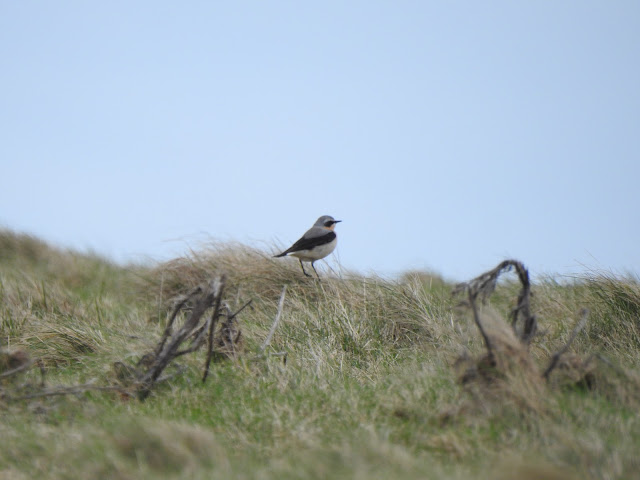
Male Wheatear, West Coast © Stuart Cossey

The first Bumblebee survey was completed with four seen including a queen White-tailed Bumblebee and a queen Buff-tailed Bumblebee.

15 March

Sunny with a light breeze from the southeast.

Numbers of Meadow Pipits were higher today with a total of 75 seen, the biggest flock was 28 over the East Side. Also moving north were Linnets with 45 seen including a single flock of 27 by Rocket Pole. A female Brambling was calling in the trees by the Casbah during the morning census, this species is usually seen on the island during Autumn. The first Swallows were seen today with one near the Lambing Shed and a flock of six over Halfway Wall. A Sand Martin was also seen heading southwest in the afternoon. At Jenny’s Cove a total of 80 Puffins were seen on the water.

Linnet, Old Light © Stuart Cossey

16 March

Overcast with a cold westerly wind. Some periodic low cloud and rain throughout the day.

The first moth trap of the year was completed overnight with three moths recorded in the morning. An Early Thorn, Dotted Border and the micro moth Caloptilla stigmatella. In avian news, the low cloud had brought in a few more migrants including a Stock Dove south of Pondsbury and two Golden Plover by the Airstrip. Seven Chiffchaff were seen with four in Millcombe, one by Rocket Pole, one by Pondsbury and another by the Farmyard. A single Redwing was in Millcombe and four male and three female Wheatear were counted along the West Coast. At Jenny’s Cove 42 Puffins were counted with one seen on land. Also at Jenny's Cove were around 700 Guillemots and 400 Razorbills.

Puffins, Jenny's Cove © Stuart Cossey

17 March

Clear and bright with a moderate wind from the southwest.

A Sand Martin flew southwest over South West Field during the morning census. A male Kestrel flew north along the Upper East Coast during the guided walk and the first Blackcap of the year, a female, was seen by the LFS working party as they planted Willow in St. John’s Valley. Five Wheatear were recorded today as well as three Redwing, 48 Meadow Pipits and four Pied Wagtails. A Great Northern Diver was still off the East Coast.

18 March

A foggy start with a clear afternoon. Moderate wind from the southeast.

Four Wheatear and 64 Meadow Pipits were seen today with a Snipe flushed by Pondsbury. A Sparrowhawk was seen hunting Starlings over Barton’s Field in the late afternoon.  In Millcombe a female Firecrest was seen foraging around the Gas Store.

Signs of spring were obvious today with Starlings seen with nest material around Barton's Row. The first Soay lambs were seen today including a mum with triplets by Earthquake.

Soay family, West Coast © Stuart Cossey

19 March

Strong and cold easterly winds but clear blue skies.

A male Blackcap was seen in Millcombe during the morning census and the female Firecrest was also still present. During the day a total of 49 Meadow Pipits, 24 Linnets and 12 Pied Wagtails were counted. Two male Bramblings were seen, one at Jenny’s Cove and another on the track by High Street Field. They were then both seen together feeding with the House Sparrows by the Laundry.

Female Firecrest, Millcombe © Stuart Cossey

Rosie and Stuart spent the afternoon checking the Manx Shearwater nest boxes on the West Coast before they return to the island. Whilst down on the slopes they recorded a female Black Redstart and three singing male Wheatear including one colour ringed bird. The first Manx Shearwater of the year was heard calling from its burrow. Also of note was a Merlin seen at Halfway Wall and a flock of seven Grey Herons heading North past Jenny’s Cove

Grey Herons, Jenny's Cove © Stuart Cossey

20  March

Clear and bright with continued strong easterly winds.

It was an excellent day for migration with a record highest spring count of Brambling with 33 recorded across the island. At one point 20 were seen under the feeders by the Camping Field but small flocks and single birds were turning up everywhere. Other visible migrants include 155 Meadow Pipits, four Cormorants, two Redwing, a Fieldfare, a Sand Martin, three Swallows and the first House Martin of the year at North Light. Also at the North End were two Gannets and a Red Admiral butterfly. A Dunlin was flushed off one of the streams past Threequarter Wall and a Jack Snipe and two Snipe were flushed by Pondsbury. A Stock Dove was seen heading south past Rocket Pole before then being seen heading north followed by a Peregrine! The first Feral Pigeon / Rock Dove was seen in the Village, the lack of rings proving it was a wild bird and not a racing pigeon. A total of 13 Pied Wagtails and six White Wagtails, which are the continental subspecies of Pied Wagtails were recorded.

Male Brambling. West Coast © Stuart Cossey

White Wagtails, Barton's Field © Stuart Cossey

One Puffin was seen at Jenny’s Cove as well as 430 Kittiwakes. It was a dark evening and at least 14 Manx Shearwaters were seen and heard coming in to land around Benjamin’s Chair and the South West Point.

Manx Shearwater, South West Point © Stuart Cossey

Contributors: C Povey, L Lo-Vel, L Cookson, K Williams, K Dobie, T Larose, A Rowland, J Hedger, S Waterfield,  H and P Lymbery, R Ellis

Monday, 14 March 2022

7th to 13th March – First Wheatears, Sand Martin and Puffins

7 March

Overcast with an easterly wind.

A Merlin over the East Side was one of the few birds of note.  Skylark numbers are building with 15 counted including birds singing over Castle Hill, South West Field and Ackland’s Moor. 29 Meadow Pipits, four Pied Wagtails and six Linnets were counted during the morning census today.

8 March

Light rain showers with a moderate southeasterly.

Amongst today’s arrivals were the first two Wheatear of the year with a pair seen above Quarry Pond. Also seen were two Goldfinch, seven Linnets and 24 Meadow Pipits. Four Goldcrests were recorded across the island and a Chiffchaff and two Water Rail were in Smelly Gully. Of note were three Snipe flying over in the (late) evening whilst walking back from the Tavern.

9 March

Dry with strong southerly winds.

Two Cormorants flew north along the West Coast. A Grey Wagtail was seen on Barton’s Pond late afternoon and three Snipe were flushed from the rush. A Chiffchaff was seen and heard calling in the trees above Millcombe House.

10 March

Overcast with wind from the southwest.

The lighter winds really boosted numbers today. A total count of 108 Meadow Pipits were recorded, with a large flock of 34 over Barton’s Field. The first Sparrowhawk of the year was seen briefly over the fields above Quarter Wall Copse and the first Sand Martin flew along the East Coast. The Landing Bay was calm and so it was possible to see a Great Northern Diver. Yesterday’s Grey Wagtail was recorded again. It was in the Pig Sty during the morning census and then by Brambles Pond in the late afternoon. Also of note was the arrival of four Chiffchaffs with three in Smelly Gully and one by Stoneycroft, though we are yet to hear any making their characteristic song. Finally a Reed Bunting was heard calling above Pondsbury, could this still be one of the pair first seen on 25th November.

Grey Wagtail, Brambles Pond © Stuart Cossey

11 March

Light rain showers with moderate winds from the southeast.

A quieter day with only 11 Meadow Pipits recorded. The Grey Wagtail was heard briefly as it flew out of St John’s Valley and headed south. A Collared Dove was also reported today. 

12 March

Overcast with strong wind from the southwest. Heavy rain in the afternoon and overnight.

Three male Wheatear were along the West Coast between Old Light and the Battery. 38 Meadow Pipits and nine Pied Wagtails were seen across the island. Four Chiffchaffs were seen including one individual sheltering in the dry stone wall by Tillage Field.

Male Wheatear, West Coast © Stuart Cossey

At Jenny’s Cove the first Puffins were seen with eight rafting together. The number of Puffins should increase towards the end of the month. A Great Northern Diver was in the Landing Bay and a Red-throated Diver was off Rat Island.

13 March

Dry and sunny in the afternoon with wind continuing from the southwest.

After yesterday’s strong winds a raft of 29 Shag were seen in the Landing Bay. A single male Wheatear was at the western end of the Airstrip and 42 Meadow Pipits were seen. Surprisingly a bat was recorded flying around Quarry Pond at 13:00. Photos and size suggest either a Noctule, Leisler's or Serotine Bat.

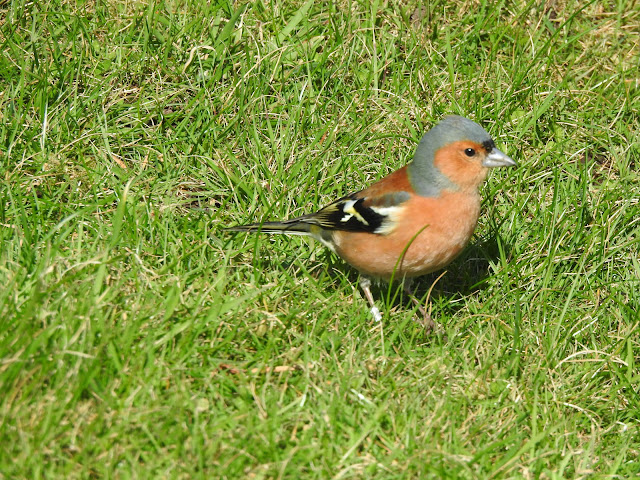
Male Chaffinch, Village © Stuart Cossey

Monday, 7 March 2022

28th February to 6th March – Meadow Pipits continued…

28 February

Low cloud and rain all day with some clearer spells in the afternoon.

As has been expected this year, another helicopter changeover was delayed by low cloud. The consistent light rain only slightly slowed the Meadow Pipit migration with 40 recorded across the island. A total of eight Teal were on Pondsbury, 13 Chaffinch and a Greenfinch were in Millcombe.

Singing in the rain. Robin, Millcombe © Stuart Cossey

1 March

Clear with moderate winds from the southeast.

A Merlin was seen hunting Starlings across Tillage Field. A Jack Snipe was flushed from the north of Brick Field whilst working to install new fences.  Meadow Pipit numbers are still high with 44 counted today. A single Linnet was also heard heading north.

2 March

Wet and overcast in the morning but clearing in the afternoon. Winds continuing from the southeast.

Another wet morning census with two Redwing in the top of Millcombe Valley the highlight. The clouds cleared in the afternoon for a guided walk with a Goldfinch singing in Millcombe, Kestrel seen over the East Side and three Woodpigeon above St Helen’s Copse. There are still Meadow Pipits heading north with 32 recorded.

3 March

Cold and overcast with strong winds from the northeast.

After a week without being seen a Great Northern Diver was fishing in the Landing Bay this morning. A visitor also recorded a Gannet off North Light. The three Woodpigeon were seen feeding in Barton’s Field. Ten Skylark were recorded with many singing and likely holding territory. A total of 60 Meadow Pipits were seen heading north today. Pied Wagtails and Linnets were also on the move with five of each recorded across the island.

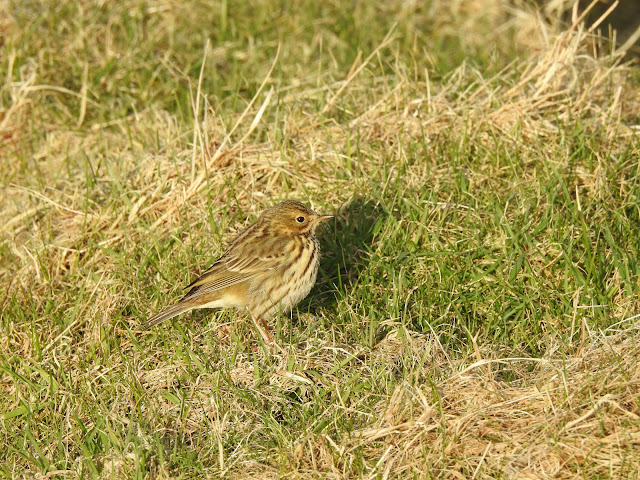
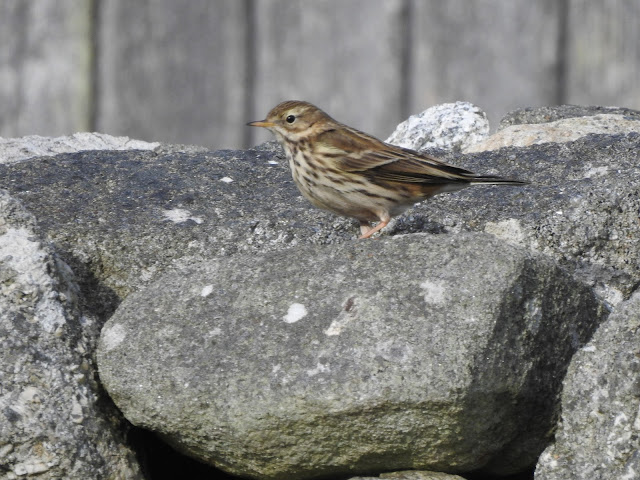
Meadow Pipit, St John's Valley © Stuart Cossey

4 March

Clear with some light rain. Wind from the north.

Meadow Pipits are still migrating over the island in good numbers with 46 recorded. A 1st winter Yellow-legged Gull was seen with 116 Herring Gulls and four Lesser Black-backed Gulls in Tillage Field in the afternoon. Five Oystercatcher pairs are now on territory in the Landing Bay and Rat Island.

5 March

Clear and bright but with a cold wind from the north.

A similar day to the rest of the week with not a lot moving through other than Meadow Pipits, 58 of which were seen today. Also recorded flying over were nine Linnets and one Goldfinch. More surprisingly a Cormorant flew north along the East Side.

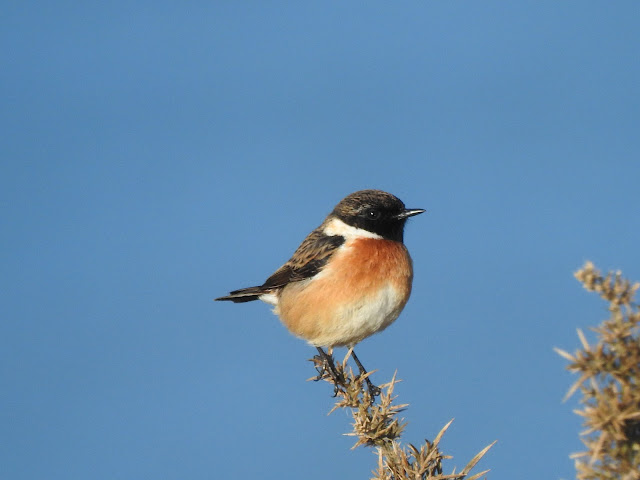
Male Stonechat, Pointless Wall © Stuart Cossey

6 March

Overcast with a cold wind from the northeast.

The strong wind blowing up Millcombe Valley reduced the numbers seen today. A group of 10 Teal on Pondsbury was included three males in breeding plumage. Also of note were a Merlin by Quarter Wall and 7 Woodpigeon along the East side (four in Millcombe and three at Quarter Wall Copse). Meadow Pipit migration was also affected by the strong winds with 38 seen today. A group of nine Skylark were seen in the wet flush above Jenny’s Cove.

Monday, 28 February 2022

21st to 27th February – Meadow Pipits on the move

Strong winds still from the west at the beginning of the week. Dry and bright on the 25th, 26th and 27th.

Two quiet days with the strong westerly winds continuing from last week. Two Great Northern Divers were seen together in the Landing Bay with 25 Shags on the 22nd. A Chiffchaff was still in Millcombe on 22nd, 23rd and 24th. Four Redwing were seen on 22nd and 23rd but no visible migration has been observed yet.

The first Black Redstart of the year was seen below Benjamin’s Chair on the 25th. It was low down on the slope but the red tail was easily visible. Pied Wagtails were recorded on five days with a maximum of two on the 25th. Meadow Pipit migration started slow on the 23rd with 11 recorded but soon increased with 52 and 66 recorded on the 26th and 27th respectively. The numbers of Skylark and Linnets migrating were also up on these dates. A maximum of 23 Skylarks and 26 Linnets were seen or heard flying over on the 26th.Singles of Goldfinch were also recorded on the 26th and 27th.

Non-avian news included a Peacock butterfly on the 25th and a Red Admiral on the 27th.

14th February to 20th February – Three storms in one week

High winds all week with maximum gusts of 86mph.

With warnings of high winds all islanders were requested to stay indoors to avoid any flying debris during Storms Dudley, Eunice and Franklin. There are a few limited sightings from this week. Snipe were recorded on the 14th, 15th and 17th with a Jack Snipe recorded by Rocket Pole on the 17th. A Merlin was seen on the 14th to the 17th. In Millcombe there were three Chiffchaff and two Goldfinches on the 15th, a Siskin on the 17th. Out to sea a Red-throated Diver was in the Landing Bay in the 17th and at least one Great Northern Diver was present all week with a maximum count of three on the 19th.

There was one storm blown rarity with visiting birder Martin Thorne seeing a 2nd calendar year Iceland Gull on Ackland’s Moor.

Contributors: Rosie Ellis, M Thorne, N Trout

Monday, 14 February 2022

7th February to 13th February – A few calm days for migration to start

7 February

Overcast with dense fog from 10am

With lighter winds there was a noticeable passage of Linnet through the island with a flock of six in Millcombe and another 4 heard over Ackland’s Moor and South West Fields.  The two Chiffchaffs remained in Smelly Gully and two Great Northern Divers off the East Coast. A total of 19 Mallards were recorded during a full coverage of all the ponds on the island. Also of note was the second Woodcock of the year flushed along Quarter Wall.

8 February

Overcast with strong westerly winds

The female Bullfinch was seen briefly in the Blackthorn below the Ugly by visiting birder Tim Jones before leaving the island after yesterday’s helicopter cancelation. A single Great Northern Diver was still off the East Coast, this time by White Beach. One Chiffchaff and a Goldcrest were in Smelly Gully at the bottom of Millcombe. At Pondsbury, ten Teal were counted and two Reed Buntings were in the Gorse to the south.


Teal, Pondsbury © Stuart Cossey

9 February

Fog and rain clearing slightly in the late afternoon

The morning census was quiet with few species seen in the fog. The Song Thrush, Chaffinch and Goldfinch are still singing in Millcombe and a Chiffchaff was in Smelly Gully. Once the cloud lifted in the afternoon a Merlin was seen chasing a Skylark through the trees in Quarter Wall Copse. They were then lost to view as the Skylark disappeared below the cliff. A single Linnet was heard over Quarter Wall.

10 February

Bright and sunny but with strong westerly winds

A few signs of migration were seen today with two Meadow Pipits flying high over Quarter Wall and a total of six Linnets calling as they flew over. The Merlin was seen again, this time chasing Starlings over the Village. In Millcombe two Goldcrests were in the Sitka Spruce by the Ugly and a Chiffchaff was still in  Smelly Gully.

Sightings during an hour seawatch at 1pm included 1400 Kittiwakes, a Great Northern Diver in the Landing Bay and a Red-throated Diver swimming north.

11 February

Bright with light southerly winds.

It was an excellent day for finch migration due to the calm morning. A total of 73 Linnets were seen, most were flying over but a flock of 30 were briefly in Millcombe. Also on the move were four Brambling which went north along the East Coast and 12 Chaffinches that went south off Benjamin’s Chair. A Greenfinch was heard calling as it flew low over the Village from the west. Meadow Pipits and Skylark were also flying overhead today with totals of nine and 17 seen or heard.

Another highlight was more close views of the Merlin hunting a Skylark, this time low over the top of Millcombe Valley.


Meadow Pipit, Paradise Row © Stuart Cossey


Linnet, Lambing Shed © Stuart Cossey

12 February

Mostly cloudy with strong south-westerly winds

A complete change to yesterday’s calm weather with 40mph winds battering the island. Very few passerines were recorded, a Woodpigeon and Goldcrest were in Millcombe. Only four Blackbirds were seen, ten lower than the 11th. Two Peregrines were speeding around above Benjamin’s Chair whilst a Merlin was sticking low over South West Field.

13 February

Rain all day with a few hours of light showers

A short census was completed late morning once the rain was slightly lighter. Only 15 species were recorded including eight Chaffinch, three Redwing and a Goldcrest in Millcombe.

Monday, 7 February 2022

31st January to 6th February – An excellent week for seawatching

31 January

30mph winds from the northwest, overcast but dry

Three Woodpigeon continue to be seen around Millcombe with a Water Rail, Chiffchaff and two Goldcrests in Smelly Gully. After almost two weeks of absence a Merlin was seen hunting Skylark over South West Field. Further up the island 10 Teal were on Pondsbury. Off the East Coast were 2000 Kittiwakes with two Mediterranean Gulls and 15 Common Gulls. The Red-throated Diver was still present off Rat Island.

1 February

Bright with moderate winds continuing from the west

The Lapwing continues to be seen in Barton Field and an amazing 14 Snipe were seen across the island, the majority in a wet flush in South West Field. Kittiwake numbers are still high with an estimated 3500 off the East Coast. Only a single Common Gull was picked out amongst them though. A Great Northern Diver and Red-throated Diver were also off the East Coast.

Two Chiffchaff continue to be seen in Smelly Gully at the bottom of Millcombe Valley, one ringed and one unringed.

Lapwing, Barton Field © Stuart Cossey

2 February

Mostly cloudy with moderate winds from the north

It was a busy morning in Millcombe with Song Thrush, Robin, Dunnock, Wren and Chaffinch all singing. Two Chiffchaffs and five Goldcrest were also recorded. The first Snow Bunting of the year was seen up past Threequarter Wall in the late morning.

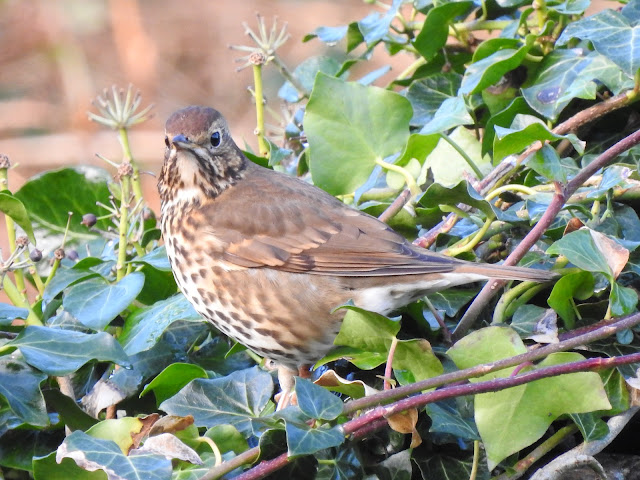
Song Thrush, Millcombe Valley © Stuart Cossey

There was an obvious passage of gulls off the East Side and North End today with seven Black-headed Gulls, five Mediterranean Gulls, 44 Common Gulls and a Little Gull seen with an estimated 3350 Kittiwakes.

3 February

Dry and mild with continued 20mph winds from the northwest

A slight change was noted off the East Coast with only 2000 Kittiwakes, one Black-headed Gull, one Mediterranean Gull and six Common Gulls. The Merlin was seen off Castle Hill flying high south to chase migrating Skylark back towards the island. The Merlin was unsuccessful this time but was seen amongst the Starlings in Tillage Field later in the day. There was no sign of the Lapwing in Barton Field despite multiple visits.

4 February

Bright with strong winds continuing from the west

The Kittiwake flock remains off the East Coast with an estimated 3500 present along with three Common Gulls. Back on land, a Jack Snipe and a Snipe were in a wet flush in Southwest Field.  Also of note was a Merlin and ten Skylarks.

5 February

Overcast with winds from the west gusting at 40mph

The female Bullfinch that was last seen on the 24 January was back in Millcombe Valley. It remains elusive with only a brief sighting before disappearing into dense scrub. Also in Milcombe were two Chiffchaffs, 16 Chaffinches including a small flock if 13 and a singing male.

At the edge of the Landing Bay 3000+ Kittiwakes were joined by one 1st winter Black-headed Gull, three Common Gulls and two 1st winter Little Gulls. A Great Northern Diver and 66 Shag were also recorded.  

6 February

Overcast with some rain showers. Strong winds continue from the west

Really strong winds meant that there were few birds on the plateau. A total of six Water Rail were recorded, four in Millcombe and two in St Helens Copse. Also in Millcombe were 13 Chaffinch and a Chiffchaff and Goldcrest were in Smelly Gully.

The 3200 Kittiwake were still off the East Coast, though even with close views and amazing light only two Common Gulls were seen with them. The two Great Northern Divers are still in the Landing Bay.

Kittiwakes, East Coast © Stuart Cossey